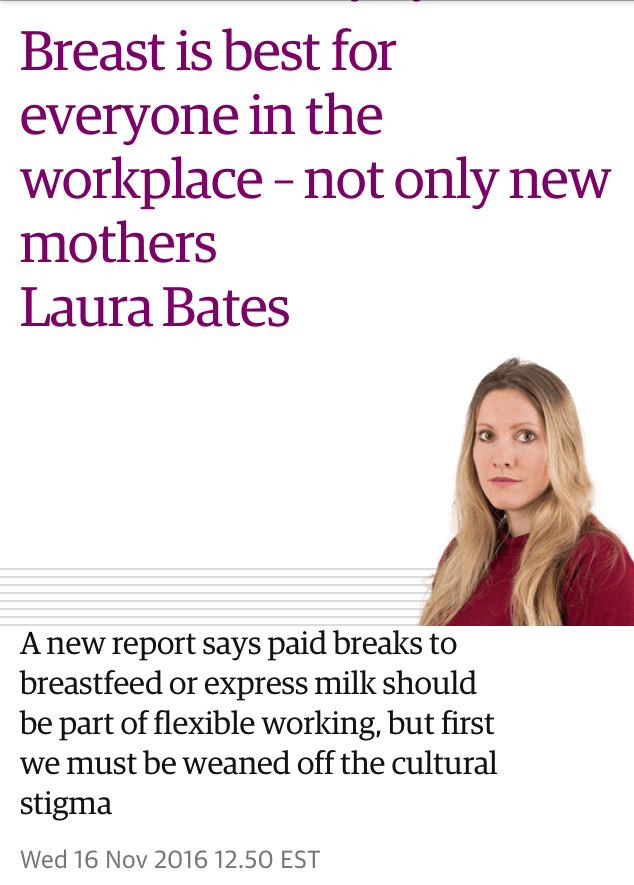
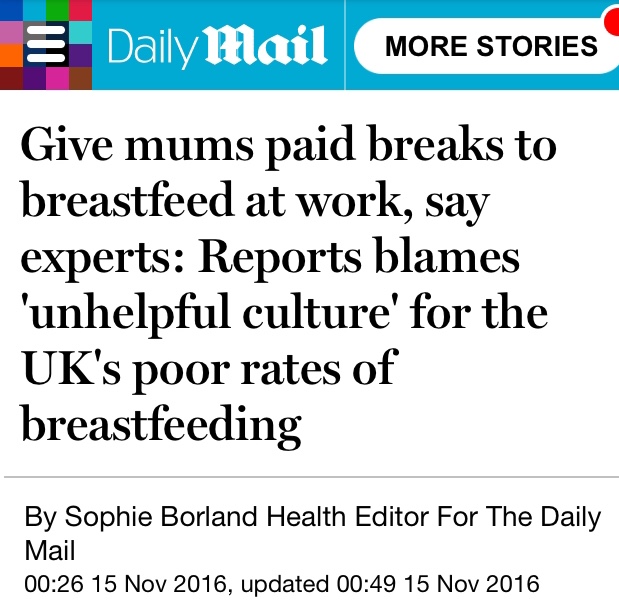
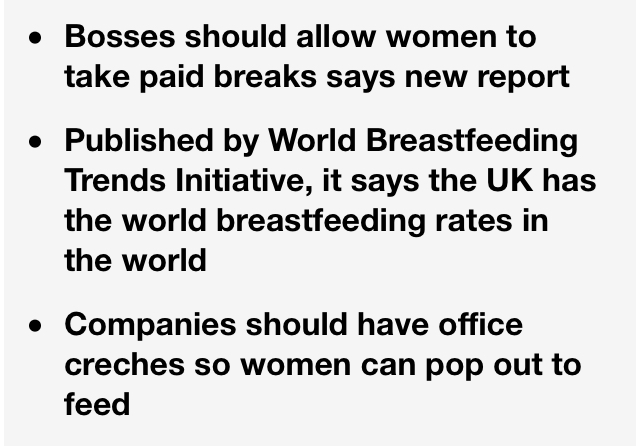
The media have been reporting today on the lack of legal protection in the UK for women to express milk or breastfeed when back at work. This is one of the reasons women cited for stopping breastfeeding in the U.K. National Infant Feeding Survey.
Media coverage of WBTi’s findings on gaps in Maternity Protection in the UK
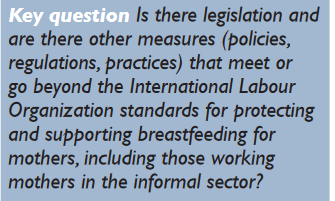
The media seized upon our findings on the lack of maternity protection, in particular the lack of any statutory rights for mothers to breastfeed or express milk at work. There are resources to support employed mothers, and resources to guide best practice for employers (from Maternity Action and from ACAS), but mothers have no rights in law beyond basic health and safety.
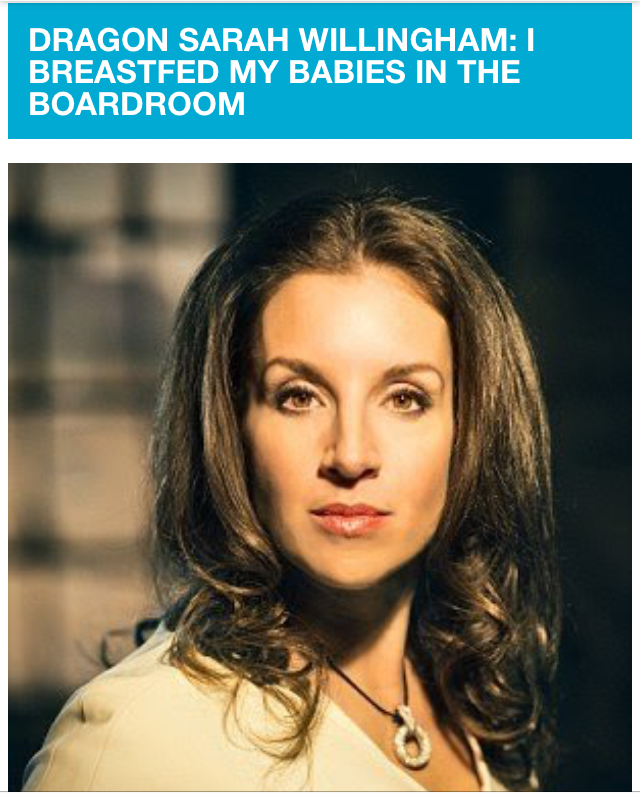
The Daily Mail even featured a paragraph about how Sarah Willingham from Dragon’s Den balanced breastfeeding with her boardroom responsibilities.
Update on gaps in Shared Parental Leave
Ros Bragg from Maternity Action has also written this blog for WBTi about the current legal rights of breastfeeding mothers in the workplace, with the onset of Shared Parental Leave.
What has YOUR experience been, combining breastfeeding and returning to work?
Helen Gray MPhil IBCLC is Joint Coordinator of the WBTi UK Steering Group. She is one of the co-authors of Maternity Action’s “Accommodating Breastfeeding at Work: Guidance for Employers”
Valentine’s Day saw the launch of the Medway ‘ Grow My Brain’ campaign at the Medway Maritime Hospital, which I was fortunate to attend. Hospital midwives, health visitors, public health commissioners, local authority councillors and members of the press also attended. Dot Smith, the Head of Midwifery opened the launch by explaining how this campaign is aimed at helping parents interact with their unborn children from conception into early childhood. She said that Jo Maynard, the Infant Feeding Co-ordinator at the hospital had the initial idea and was supported by her colleague, Trude Mc Claren, Midwifery Lead in the Birth Centre, to draw the images. Jo then explained that although midwives have been talking to parents about brain development for some time, these messages are often not remembered when parents are asked about them in audits. Scott Elliott, Head of Health and Wellbeing Services, Public Health, Medway Council described how local users were consulted through focus groups, which were often of men, on their views of the animations and images. Jo explained that simple interactions with the baby inside and outside the womb stimulates the hormone oxytocin in both the parents and the babies, which helps bonding with the baby and feelings of calmness, stimulating cell connections in the baby’s brain. The aim of the campaign is to reinforce these messages and make them relevant to parents and families so they feel able to interact with their small children, build relationships and help their brains develop.
“Love Me, Grow My Brain” A Better Medway
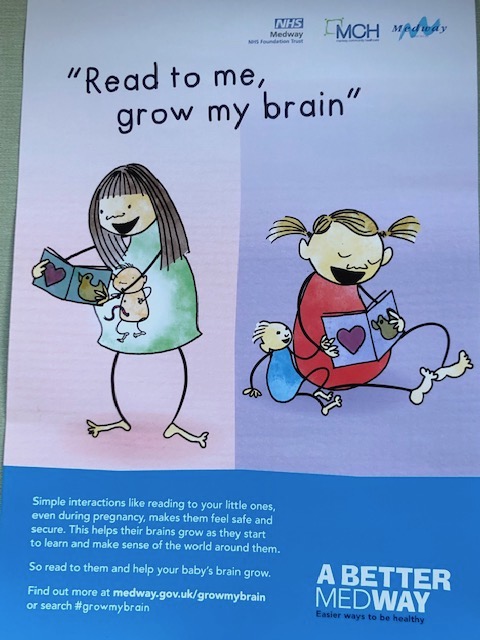
The materials were released today on the ‘A Better Medway’ website and consist of six 20 second film clips, showing parents how they can interact with their unborn and new born babies in the first 1,000 critical days after conception. This vital time in a baby’s brain development is when emotions such as love and trust develop and may impact on the child’s future personality, educational achievements, future physical and mental health and job prospects. Each film begins with a child’s voice, still in the womb saying ‘grow my brain’ and what parents can do to relate to the unborn baby then there is a ‘pop’ (the birth!) followed by a message about different activities that parents, grandparents, siblings and others can do to help this happen. The messages of ‘love’, ‘talk’, ‘play’, ‘keep me close’, ‘sing to me’, ‘read to me’, and ‘dance with me’ are demonstrated in the animations in the films, on posters and stickers.
“Love Me, Grow My Brain” A Better Medway
The plan is to promote the films to families through every health professional contact, when stickers can be put on notes, through Social Media and to have planned spikes in marketing at key times such as National Book Day for the ‘Read to me’ and Strictly Come Dancing for the ‘Dance with me’! Scott suggested that success of the campaign will be realised by the volume of social media posts, coverage by the media, numbers of staff trained breastfeeding audits, case studies especially dad’s stories on the website and the Medway Citizens’ Panel feedback.
This inspiring, novel campaign could have a far-reaching impact on building warm, close relationships between children and their families. This could optimise the brain development of the future generation of Medway and improve its future physical and mental health.
Alison Spiro Specialist Health Visitor WBTi UK Steering Group




 Breastfeeding trends (UK)