
By Kate Butler
Peer Supporter, West Hertfordshire Hospitals NHS Trust
As a mum embarking on a new breastfeeding journey with their baby, who could she turn to for support and advice that she can trust? How would she know that what she’s doing is “right”, that her baby’s behaviour is “normal”? Her midwife? GP? Obstetrician? Paediatrician? Health Visitor? Surely the advice and support you get from a qualified and trained healthcare professional can be trusted? The findings from the World Breastfeeding Trends Initiative (WBTi) UK 2016 Report (published November 2016) may surprise you.

Health professional training in the UK
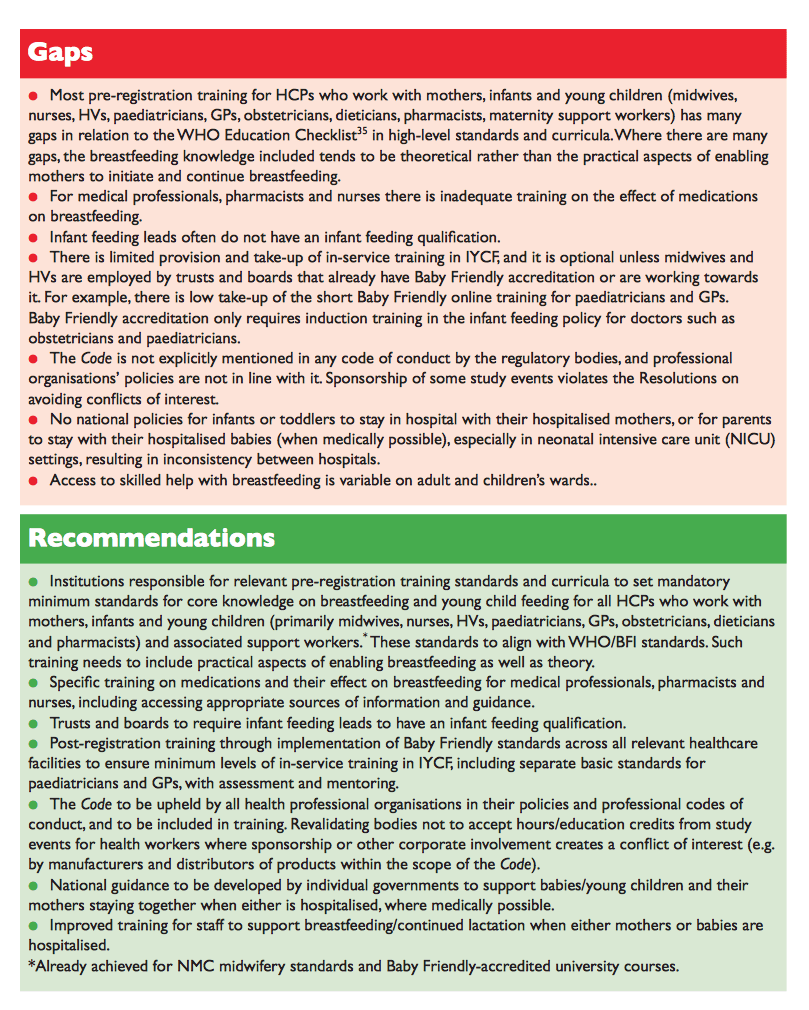
The WBTi UK Report (WBTi UK 2016) was based on the WBTi toolkit developed by the International Baby Food Action Network (IBFAN) to help countries evaluate breastfeeding policies and practices in a systematic way. One area that the report focuses on is health professional training and subsequent impact on breastfeeding initiation and continuation rates across the UK. Worryingly the report highlights many gaps in the pre-registration training of some healthcare professions in the area of infant and young child feeding, particularly in the practical aspects of enabling mothers to initiate and continue breastfeeding. Following qualification, healthcare professionals are then expected to undertake in-service training in infant and young child feeding. The WBTi UK Report reveals that provision and uptake of these courses is limited.
So what does this mean? The very healthcare professionals our new mums ought to be able to trust to give them the right advice may not be the right source of information to enable a mum to breastfeed successfully. It’s through no fault of the healthcare professional, but rather the fault of how their initial training and ongoing training is structured. Therefore their advice and support might often based on personal experiences and/or out of date practices. Not only that but our healthcare professionals also have to work in line with their own NHS trust policies. These differ between trusts and are based not only on NICE guidelines but also considerations such as the skill set of staff and trust finances.
Breastfeeding rates are dropping off drastically after birth
The issue with all this? Published in November 2012, the 2010 Infant Feeding Survey showed that the initial breastfeeding rate in the U.K. was 81%. Across the UK, at three months, the number of mothers breastfeeding exclusively was 17% and at four months, it was 12% (Infant Feeding Survey 2010). However, exclusive breastfeeding at six months is only around 1%. But with the infant feeding survey being cancelled last year and lack of any national leadership or strategy in infant feeding, what hope do we have to improve these figures? What hope do we have of changing the way our health professionals are trained and how their on-going training is structured?
Some people might ask what’s wrong with these figures presented above. In doing so, they reflect a society, our society, in which formula feeding has become normalised. Where friends and family see formula as “just as good” as breastmilk and don’t have their own personal experiences of breastfeeding in order to support new mothers. The World Health Organisation recommends exclusive breastfeeding up to 6 months of age, with continued breastfeeding along with appropriate complementary foods up to two years of age or beyond. It is not within the scope of this post to explore the reasons behind this recommendation, more this article is to raise the issue that breastfeeding families have a dwindling pool of resources from which to obtain support during their breastfeeding journeys. Breastfeeding families are unlikely to be able to rely on advice from healthcare professionals, friends or family. That’s a lonely existence.
How can we change society and health care for new mothers and babies?
All is not lost though. The Unicef Baby Friendly Initiative, launched in the U.K. in 1995 (Unicef UK Baby Friendly Initiative 1995), is based on a global accreditation programme of UNICEF and the World Health Organisation. It is designed to support breastfeeding and parent infant relationships by working with public services to improve standards of care. Maternity units and community facilities have the option to become Baby Friendly accredited and in order to do so are required to provide training for its midwives and health visitors. While the majority of maternity units (91%) and health-visiting services (83%) have achieved or are working towards Baby Friendly status, the remainder have not commenced the process. Therefore new breastfeeding mums can hope that the situation is improving and healthcare professionals that have undergone Baby Friendly training will start to provide the trusted information that mums deserve. But this will require quite a culture shift change within the NHS and this will take time.
There is also lots to be done with the image of, and marketing of infant milk so that “normal infant feeding” moves away from formula and focusses on breastfeeding.
Our society needs educating and this will also need the support and investment from the government.
For further information on how mums can find the most appropriate support right now for their breastfeeding journey, visit http://www.lcgb.org/why-ibclc/whos-who-in-breastfeeding-support-and-lactation-in-the-uk/
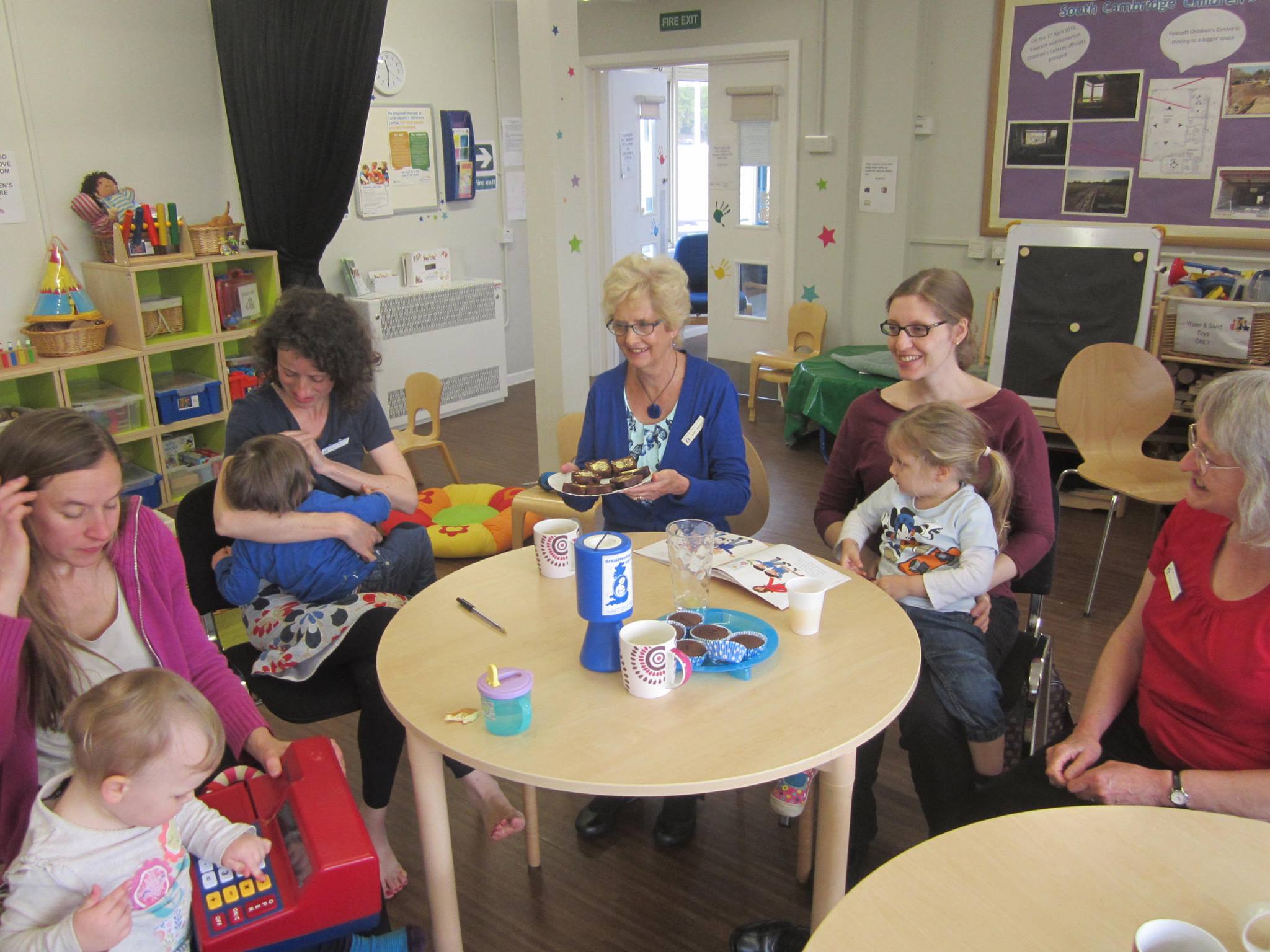
 Kate Butler is a Secondary School Biology teacher by day and mother to two boys (aged 1 and 3) day and night. She trained as a breastfeeding peer supporter in 2013 and since then has set up local peer support meetings in her local area and joined the committee of West Herts Breastfeeders to support with fundraising and event management. West Herts Breastfeeders is a community based mum to mum peer support group that supports breastfeeding families with their breastfeeding journeys in the community and within West Hertfordshire Hospitals NHS Trust. This post was first published on Kate’s blog, The Instinctive Parent (www.theinstictiveparent.org), which she started to share knowledge and help further educate parents to help them make properly informed decisions and choices in how they choose to parent.
References
Infant Feeding Survey 2010 [ONLINE] Available at: http://www.content.digital.nhs.uk/catalogue/PUB08694/Infant-Feeding-Survey-2010-Consolidated-Report.pdf [Accessed 30/13/16]
UNICEF Baby Friendly Initiative 1995 [ONLINE] https://www.unicef.org.uk/babyfriendly/what-is-baby-friendly/ [Accessed 30/12/16]
WBTi UK Report 2016 [ONLINE] Available at: https://ukbreastfeeding.org/wp-content/uploads/2016/12/wbti-uk-report-2016-part-1-11-12-16.pdf [Accessed 30/12/16]
World Health Organisation [ONLINE] Available at: http://www.who.int/topics/breastfeeding/en/ [Accessed 30/12/16]
 Breastfeeding trends (UK)