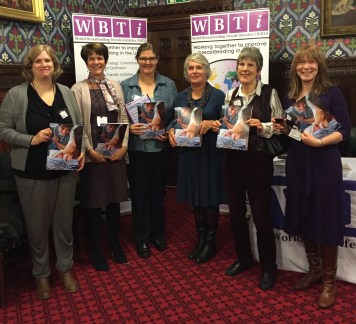
The first WBTi assessment of the UK was launched 6 months ago today in Parliament, hosted by Alison Thewliss MP, chair of the Infant Feeding and Inequalities All Party Parliamentary Group.
Huge thanks to Alison and the APPG, and to all the amazing organisations in our Core Group who worked together to identify gaps in UK policy and programmes in infant feeding, and to jointly generate recommendations for Action!
The Core Group of organisations and agencies involved in various aspects of infant and maternal health and infant feeding identified gaps in UK policy and programmes and generated joint recommendations for action.
WBTi Core Group:
Association of Breastfeeding Mothers (ABM)
Baby Feeding Law Group (BFLG)
Baby Milk Action
Best Beginnings
Breastfeeding Network (BfN)
Child and Maternal Health Observatory (CHIMAT) Department of Health
First Steps Nutrition
Institute of Health Visiting (iHV)
Lactation Consultants of Great Britain (LCGB)
La Leche League GB (LLLGB)
Maternity Action
Northern Ireland infant feeding lead
NCT
National Infant Feeding Network (NIFN)
Public Health England (PHE)
Scotland Maternal and Infant Nutrition Coordinator Start4Life
Unicef UK Baby Friendly Initiative
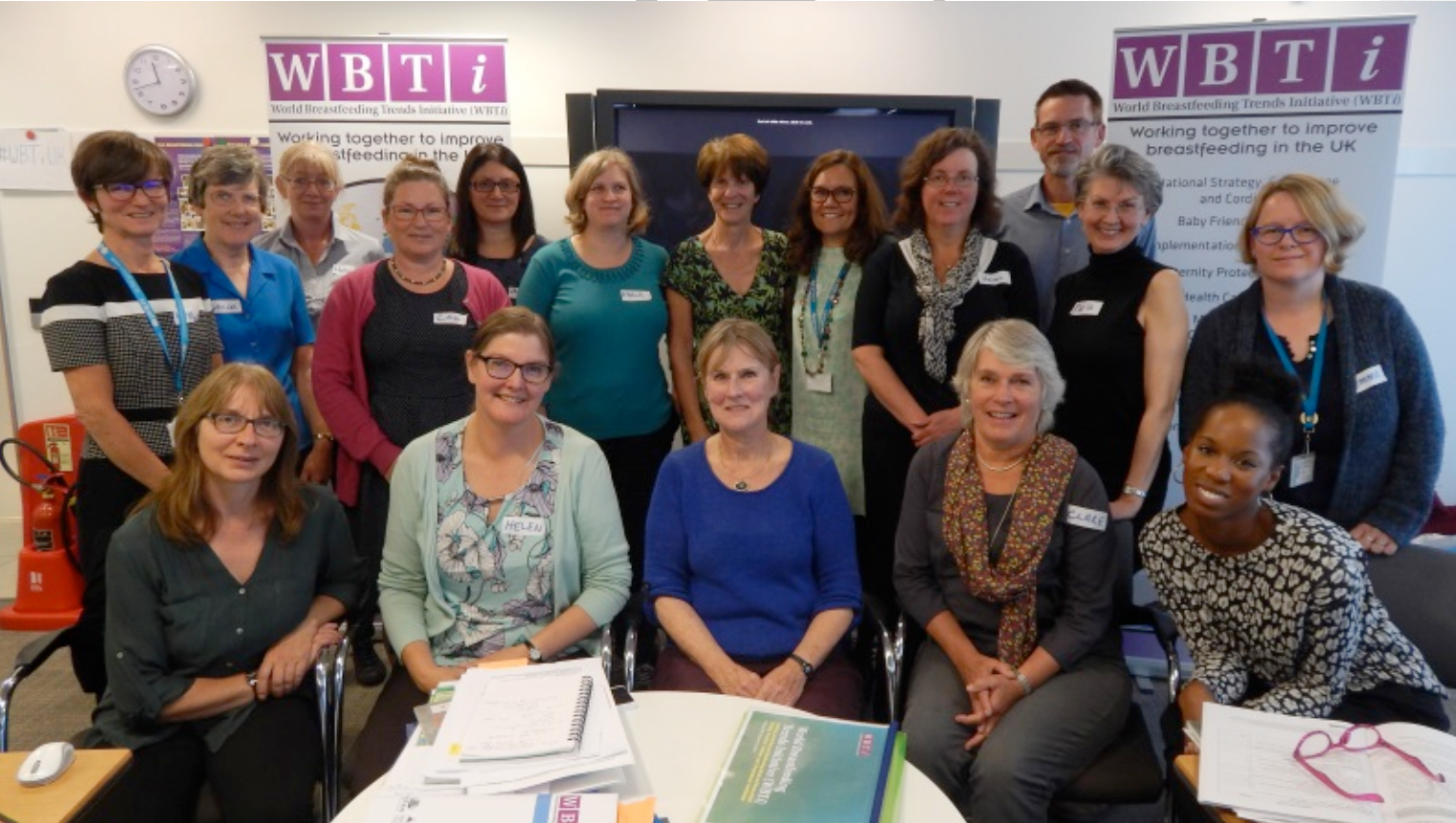
WBTi Steering Group and main authors:
From left to right:
Ayala Ochert, Alison Spiro, Helen Gray, Clare Meynell, Patricia Wise, Liz McGregor
Providing women with a clear legal right to continue breastfeeding on return to work should be a no-brainer for the UK Government. The Department of Health recommends that babies are exclusively breastfed for six months and then breastfed in conjunction with solid food, mirroring the World Health Organisation position. Bringing employment law into line with public health recommendations should be a simple matter, yet the Government continues to drag its heels.
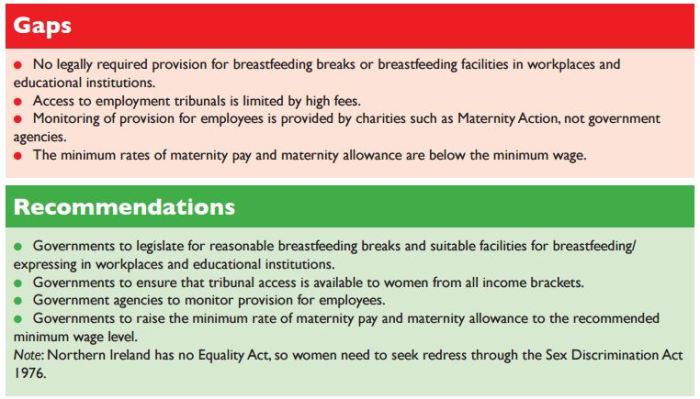
A quick glance at maternity protections in other European countries, shows that the UK is something of an outlier. Breastfeeding breaks are enshrined in law in 36 of the European countries surveyed and the vast majority of these breaks are paid. The UK, by comparison, has no statutory right to breastfeeding breaks, paid or unpaid.
Current legal protection for breastfeeding
This is not to say that there is no legal protection for breastfeeding in the UK. It is possible, in some cases, to use health and safety law to argue for working arrangements which facilitate breastfeeding. The recent EasyJet case is an example of this. Women can also make a flexible working request for changes to their working hours and conditions which allow them to breastfeed. But flexible working requests can be refused by the employer and the health and safety protections are limited in their scope. For many women, the current legal framework does not deliver the protection they require.
When Maternity Action has raised our concerns with Government, we have often been reminded about the generous period of maternity leave in the UK. We are certainly appreciative of the 12 months leave entitlement, but we are also very aware that there are very good reasons why women would return to work without taking their full year of leave. UK statutory maternity pay is quite modest by international standards. After six weeks at 90% of income, it drops to the low flat rate of £140 per week for 33 weeks, which is below the minimum wage.
Maternity Discrimination
Maternity pay is not the only factor leading to women taking less than their 52 weeks of maternity leave. High rates of maternity discrimination are prompting women to return early out of fear for their job. The introduction of Shared Parental Leave has enabled women to share up to 50 weeks of their maternity leave with their partners. There are also many women working in the gig economy who don’t have leave entitlements, placing their livelihood at risk if they take extended breaks.
Support the Action Plan from the Alliance for Maternity Rights
Maternity Action fed our concerns about workplace maternity protections into the WBTi report for the UK. We have also incorporated the call for a statutory right to breastfeed at work into the Action Plan developed by the Alliance for Maternity Rights, a coalition of parenting groups, unions, advice services and health professionals convened by Maternity Action which works to end maternity discrimination. We held a series of Parliamentary events to give profile to our call for action on maternity rights at work.
Following the announcement of the general election, Maternity Action produced a manifesto calling for each of the political parties to protect maternity rights. Key amongst our manifesto asks is a statutory right to breastfeed in the workplace. The election offers a good opportunity to raise the profile of this issue with Parliamentarians. You can help by contacting candidates in your area, asking them to commit to support the manifesto. You can email your candidate through Maternity Action’s website and find other candidates online. Protecting breastfeeding rights should be a no-brainer.
WBTI UK Report: Gaps and Recommendations on Maternity Protection in the Workplace
Rosalind Bragg is the Director of Maternity Action, a national charity advising pregnant women, new mothers and their families about rights at work, the benefits system, breastfeeding rights and access to support services. Since she joined the organisation in 2008, she has led campaigns to challenge pregnancy discrimination at work, improve support for asylum seeking women and to ensure access to maternity care for vulnerable migrant women.
Rosalind has worked in policy and management roles in the voluntary sector and civil service in the UK and Australia focusing on social justice and human rights. She has worked predominantly in the areas of employment, health and migration.
Babies are vulnerable, so it’s crucial that decisions about how they are fed are made objectively, not influenced by advertising or other marketing ploys such as price reductions. Also, babies have a single source of nourishment – milk – in the first few months so it’s essential it’s of high quality. For breastfed babies, the mother’s body ensures quality, tailored to her baby’s needs. For infant formula you’d expect regular independent testing to ensure quality. But such testing very rarely happens!
To address this, Alison Thewliss MP introduced her Feeding Products for Babies and Children (Advertising and Promotion) Bill to Parliament in November 2016. The aim of the Bill is to set standards for infant feeding products aimed at babies and children up to 36 months, and their marketing, with penalties for advertisers and promoters who do not meet the standards.
The 2nd reading of the bill is timetabled for 24 March. If this Bill is to progress MPs need to support it. That means they need to understand the damage infant formula marketing can do, by influencing and thus restricting choice, especially when promotion is misleading and labelling confusing. Will your MP support the Bill?
Concurrently, Baby Milk Action is producing a detailed UK monitoring report to show that the formula industry needs to be regulated better to protect babies fed on formula. It includes profiles of the relevant companies, an explanation of the International Code and Resolutions, analysis of changes needed in the UK Law and a summary. It’s therefore a valuable source of evidence.
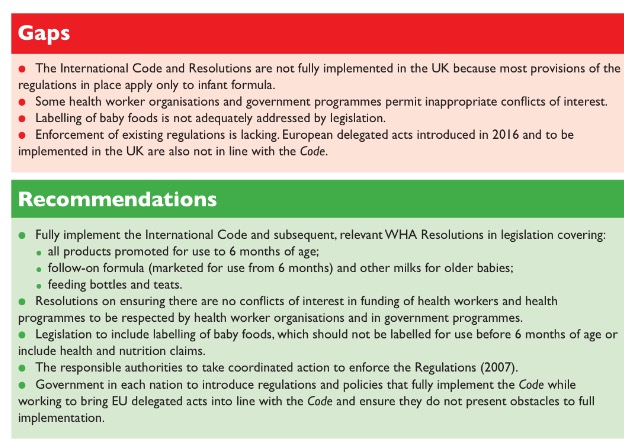
WBTi report gaps and recommendations for the UK
Indicator 3: Implementation of the International Code
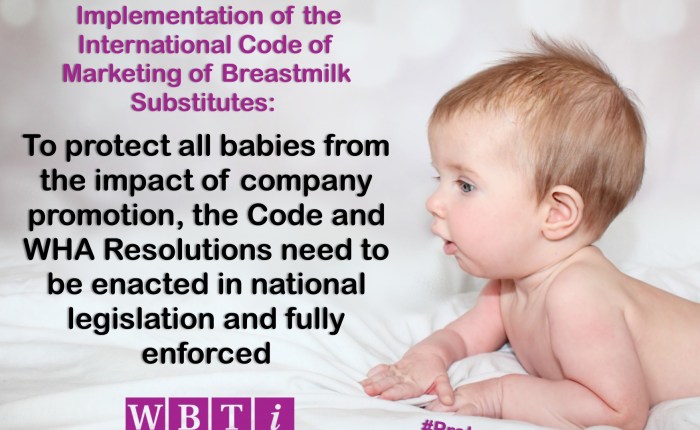
These actions work towards implementing recommendations of Indicator 3 of the WBTi report, recommendations which include full implementation of the Code and Resolutions and coordinated enforcement. These changes would help to protect both babies fed on formula and breastfed babies, improving public health.
Will you be my Valentine? Love matters to all of us.
There will be millions of Valentine celebrations taking place all over the nation on 14 February. Hearts, red roses, chocolates, gifts, expensive treats and marriage proposals will be exchanged to signal love on that day.
But… babies are born every day. People embrace each other every day. Loving relationships begin every day! Lovers kiss every day and babies are universally loved.
Affection and love shape our brains from that first kiss on day one and continually along our life course. They create that extraordinary mother and baby bond, stimulate social interactions and enable long-lasting friendships. Early loving relationships are nurtured and supported by our families, friends, health professionals and wider society. Being held closely, and responded to sensitively, by those who love you more than anyone else, has far-reaching effects on long-term emotional security and health.
The Unicef UK Baby Friendly Initiative programme has been universal in changing attitudes and encouraging best practice over the last 20 years in the UK through robust accreditation. It delivers the minimum basic standards required to support new parents – no matter how they feed their babies. It aims to create the best environment for the start of every baby’s life but is not yet mandatory for all maternity facilities in England and Wales (see WBTi UK 2016 report – Part 1, Indicator 2).
The question is why isn’t it mandatory as recommended by NICE (the National Institute for Health and Care Excellence) 11 years ago? The guidance states: “All maternity care providers (whether working in hospital or in primary care) should implement an externally evaluated, structured programme that encourages breastfeeding, using the Baby Friendly Initiative as a minimum standard.”
The governments of Scotland and Northern Ireland have a funded national strategy with a coordinator supporting all maternal and infant health professionals, and 100% of maternity units in Scotland and Northern Ireland are accredited, with community facilities aiming to achieve the same.
This cascade of national to local support aims to ensure all parents receive the best possible information, free from the undermining effects of commercial persuasion, with practical support to be enabled to make healthy decisions for themselves, which helps fulfil the government’s health message.
Families would benefit if England and Wales followed the best practice example of their neighbours.
What does Baby Friendly care mean for parents? Relevant information from pregnancy onwards, skin-to-skin contact immediately after birth as standard practice, and practical help with learning how to feed your baby. For more details, see You can expect the following standards of care from aBaby Friendly hospital. If all expectant parents knew about the standards, they could help press for them to be implemented universally.
The WBTi UK report points out gaps and provides recommendations to overcome the many barriers that women face in their daily lives, journeying from pregnancy through birth, the postnatal months, back to work and beyond, living in their own communities. See Part 1, Indicator 2 of the report for more information, with further details in Part 2.
Implementing the WBTi recommendations would contribute to the provision of the optimal conditions all parents need to begin raising their child in a loving and supportive society.
Join our campaign to bring the findings and the recommendations from the WBTi assessment to your MP!
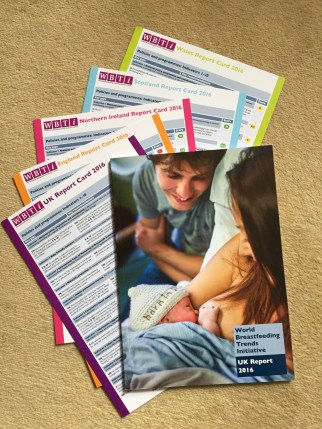
We’ve produced a one-page Report Card on the whole UK with the top recommendation for each of ten policy and programme areas. There are also individual report cards for England, Northern Ireland, Scotland and Wales. Further gaps and recommendations can be found in the full Report.
Our campaign page has all the steps and links needed to contact your MPs and national assembly members, along with tips on composing a message.
#TopTip1: The most powerful way to get your message across to your MP is to meet them in person. And hand them a copy of the WBTi Report Card along with your own top priority.
We also have tips for contacting them by letter or email.
#TopTip2: The most effective way to convince them of your message is to connect it to your own local community
What are the gaps in support for breastfeeding mothers in your area?
Are there examples of good practice to celebrate in your area?
Can you get a photo opportunity for your MP with local mothers and babies? (Babies are always a winner!)
Don’t forget to inform us when you contact your MP, and when you get a response!
The World Breastfeeding Trends Initiative (WBTi) is a tool to help countries assess their implementation of key policies and programmes. These are drawn from the WHO Global Strategy for Infant and Young Child Feeding, which was adopted by the World Health Assembly, including the UK. The first UK World Breastfeeding Trends Initiative report was published in November 2016 and launched at the Houses of Parliament. Its ten policy and practice indicators address the extent to which there is an infrastructure in a country to support breastfeeding. The process brought together organisations and agencies working in maternal and infant health to monitor progress, identify gaps and generate joint recommendations for action to address those gaps.
What is Indicator 1 about?
Indicator 1 asks if there is a national infant feeding policy, supported by a government programme, with a coordinating mechanism such as a national infant feeding committee and coordinator. The UK assessment found:
Women have autonomy over their own bodies so decide for themselves how to feed their babies but it can be very hard to carry a specific intention when the environment is unsupportive. It’s similar to the situation faced by someone who wants to avoid becoming overweight in an environment where tempting food is heavily advertised and easily available. A UK mother who wishes to breastfeed is likely to face barriers to achieving her goal throughout her breastfeeding journey.
National leadership
How can the situation be changed? An efficient way that can help to achieve consistency across the country is to have national leadership – a national coordinator with sufficient authority, a representative high level committee and a plan or strategy for change, as described in Indicator 1. Breastfeeding Policy Matters in 2015 highlighted the importance of this and the processes needed [1].
Scotland and Northern Ireland have national leadership in place but England does not. Yet the rhetoric is there. The 2016 government guidance from Public Health England, Health matters: giving every child the best start in life explains why the early years are so crucial [2]. It lists some of the health benefits and states that ‘creating the right environment to promote and support breastfeeding is crucial’. It highlights the importance of good maternal mental health so that the mother can be sensitive to the baby’s emotions and needs, helping the baby to develop secure attachment. Breastfeeding enhances a mother’s mental health while mothers who want to breastfeed but stop before they planned to are at greater risk of postnatal depression [3]. However, instead of increasing the support available to mothers, many support services were cut in 2016 because of reduced funds available. Such preventative services were not seen as a priority.
Freedom to choose how to feed one’s baby is valued in the UK and some people are concerned that mothers might feel pressured to breastfeed if it is encouraged. Ironically, advertising of follow on formula milks that might persuade mothers to switch from breastfeeding seems to cause less concern. Yet thousands of mothers make the often upsetting decision to stop breastfeeding before they wanted to. Where is the focus on these mothers and their suffering? Supporting breastfeeding is not about persuasion but about providing the infrastructure to enable them to continue; since some three quarters of mothers already opt to start breastfeeding, persuasion is irrelevant for them. If more mothers continued as long as they wished to, the proportion starting may well increase as expectant mothers will be less likely to hear negative messages.
Unicef UK’s widely endorsed Call to Action in 2016 included developing a national infant feeding strategy board in each nation [4]. What would a strategic plan encompass? The other WBTi indicators offer key points to include, such as Baby Friendly status being a universal goal, legislation in line with World Health Assembly recommendations, adequate protection for breastfeeding in the workplace, local support that is of high quality and integrated, and health professionals who have adequate training is supporting breastfeeding. If representatives of the four UK nations meet regularly they can also share ideas. Back in 2003 the World Health Organisation produced the Global Strategy for Infant and Young Child Feeding, which includes recommendations for national leadership, and this was followed in 2008 by the European Blueprint document [5,6]. Thus there are plenty of ideas available for developing a plan. The challenge is then implementation.
Alongside national leadership by governments, as described above, the breastfeeding support charities, relevant royal colleges and other similar professional bodies, campaigning organisations and interested individuals can both amplify calls for change and help to bring it about by collaborating. The infant feeding coalition meeting in June 2016, reinvigorating the idea of the former Breastfeeding Manifesto Coalition, demonstrated the keenness there is to work together [7]. Unicef UK’s Baby Friendly consultation on developing an inclusive Foundation provides an urgent opportunity to influence this – urgent because the deadline is 31 January 2017 [8].
Please read the consultation document and respond to the survey, thus helping to influence the future.
Also, check out our campaigning guidance for you to contact your MP and discuss issues highlighted in our report [9].
The launch at the House of Commons on 15 November of the first UK-wide World Breastfeeding Trends Initiative (WBTi) report on infant feeding policies and programmes gave some clues to which “stepping stones” along a family’s feeding journey are missing, where families are struggling to meet their own breastfeeding goals. While most mothers in the UK (around 80%) do set out to breastfeed, breastfeeding rates plummet within weeks until fewer than 1% of babies in the UK are exclusively breastfed at 6 months.
MPs from across the political spectrum attended the parliamentary launch, hosted by Alison Thewliss MP, along with guests from Unicef UK Baby Friendly Initiative (who provided a screening of their new short video on their Call to Action) health professional bodies, voluntary organisations, breastfeeding experts and academic researchers. Nearly 20 organisations were involved in developing the report’s recommendations for action.
These recommendations cover the family’s whole feeding journey, and range from the fundamental importance of full Unicef UK Baby Friendly accreditation of maternity settings, to health professional training and access to skilled breastfeeding support in the community, all the way to maternity protection and the provision of breastfeeding breaks in the workplace.
Dr Amy Brown gave a keynote address demonstrating how the structure of joined up policies and programmes forms essential underpinning to the cultural change that is badly needed in the UK.
Lack of political and national leadership, uneven health professional training, formula milk marketing, poor data collection and patchy community support for mothers were identified as gaps in UK policies and programmes. The degree of variability in the minimum standards of training in infant and young child feeding training among different health professions – even those working most closely with mothers and infants – was surprising.
Eyebrows were also raised at finding that, while there is guidance on the care of zoo and circus animals in case of emergency or disaster, there is no national guidance for the care of mothers and babies in an emergency situation. Formula-fed babies would be at particular risk if access to clean water and electricity were interrupted, and it is vital that national guidance be communicated to all local authorities and emergency responders.
Scotland and Northern Ireland were found to have strong strategies and national leadership in place, but England and Wales fell short.
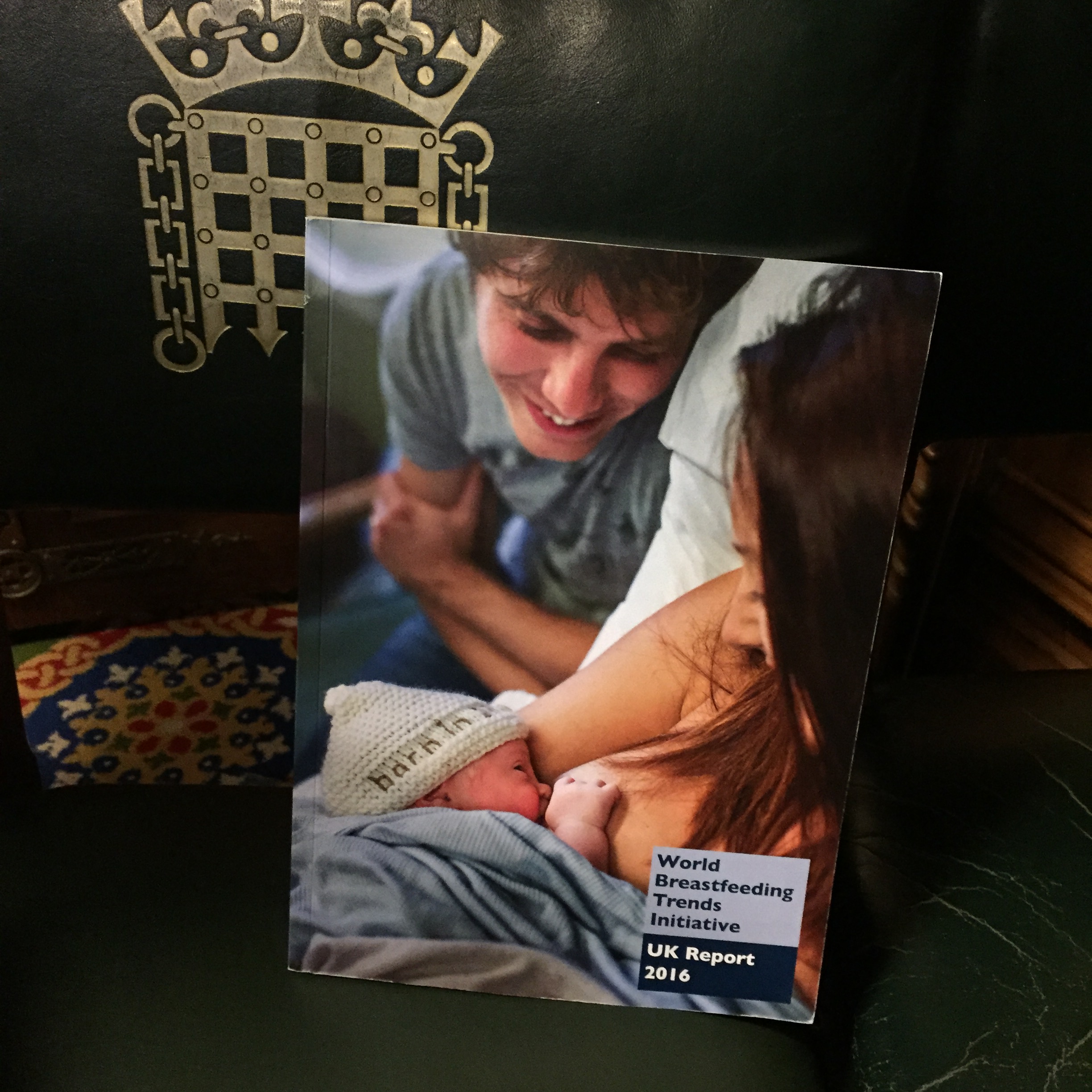
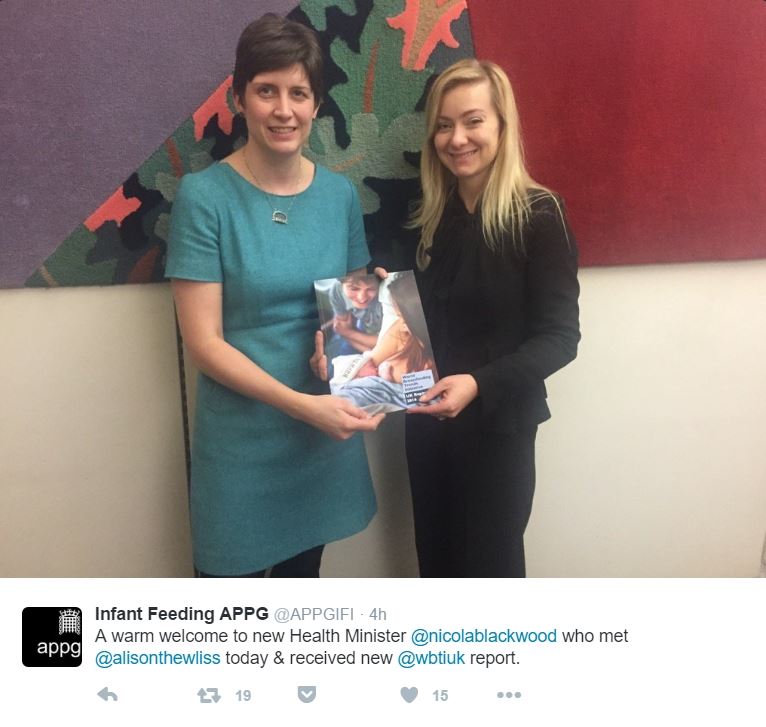
Alison Thewliss MP, chair of the All Party Parliamentary Group on Infant Feeding, hands the new WBTi UK Report to Nicola Blackwood MP, the Minister for Public Health
The Unicef UK Baby Friendly Initiative, however, was singled out as a “world leader” in its commitment to children’s rights and for the excellence of its training programmes, both in hospital settings and in the NICU and community.
The report provides the first broad-based assessment of the UK’s implementation of ten key policies and programmes to support women and babies during their feeding journey. The policies are drawn from the World Health Organisation’s (WHO) Global Strategy for Infant and Young Child Feeding, which the UK has endorsed since 2003.
Some of the recommendations from the WBTi Core Group were actions that MPs could lead on, including the full implementation in UK law the International Code of Marketing of Breastmilk Substitutes as well as its full enforcement, and the protection of breaks for breastfeeding or expressing milk for mothers returning to work. Recent studies from Save the Children and WHO have also shown that political will is pivotal in driving forward improvement in key strategies across the board to support infant feeding.
One of the key drivers for the WBTi project in the UK is women’s choices. Although the majority of mothers in the UK want to breastfeed, many of them are struggling. The majority of these mothers wanted to breastfeed for longer but did not get the support they needed to meet their goals. Mothers who stop breastfeeding early due to unresolved problems have double the risk of postnatal depression.
The impact of infant feeding on child and maternal health is well documented, but the impact on the national economy is less well understood. In addition to costing the NHS more than £40 million for five common diseases alone, the long-term impact of the UK’s low breastfeeding rates on cognitive ability, human capital and productivity across the whole population is estimated to cost the economy at least 0.53% of gross national income.
Breastfeeding rates in the UK are lowest in its most-deprived communities, exacerbating health inequalities. Breastfeeding could prove to be a powerful means of combating inequality.
This first WBTi UK report provides a road map for policy makers and commissioners to target gaps in order to provide families with the support they need all the way through their feeding journey.
“Breastfeeding is a matter of human rights for both mothers and children,” say United Nations experts in an unprecedented joint statement today. Gaps identified by the UN mirror many of the gaps identified in the recently published World Breastfeeding Trends Initiative (WBTi) report on the state of breastfeeding in the UK, specifically:
Gaps in knowledge and skills among healthcare providers (WBTi Indicator 5)
Lack of access to accurate information or support (WBTi Indicators 6 and 7)
Family, community, and cultural practices and traditions that are not necessarily pro-breastfeeding (WBTi Indicator 7)
Limited or non-existent maternity protection in the workplace (WBTi Indicator 4)
Misleading marketing of breastmilk substitutes, and the lack of corporate accountability for the adverse consequences of such marketing practices (WBTi Indicator 3)
In cases where a woman cannot breastfeed or is not willing to do so, even after having been duly informed about the benefits of breastfeeding, access to good quality breast milk substitutes should be regulated and affordable, without condemnation or judgment (WBTi Indicators 3, 5, 7)
Investments to support breastfeeding are often marginal and far from adequate (WBTi Indicator 1)
Previous UN recommendations specific to the UK also included the recommendation to systematically collect data on infant and children’s food and diet (WBTi Indicator 10).
Human rights, and the UK’s obligations under the Convention of the Rights of the Child, underpin the WBTi UK Report, which states: “The mother and the baby are a dyad, and they have rights as a dyad; [neither trumps the other]. Each has explicit rights; both mother and baby require protection and support to make successful breastfeeding a reality.”
UN Special Rapporteurs on the Right to Food, Right to Health, the Working Group on Discrimination against Women in law and in practice, and the Committee on the Rights of the Child issued the statement through the Office of the United Nations High Commissioner for Human Rights today.
A number of local and national breastfeeding support organisations have documented cuts to funding and services providing breastfeeding support. This briefing paper was developed by several organisations with the help of volunteers from the WBTi UK team, setting out the current situation in England. It includes a partial list of cuts at the time of writing. Funding situations do change so please send any updates or corrections to wbtiuk@lcgb.org.
Following The Lancet’s series on breastfeeding, published on 30 January, reports in the press largely focused on Britain having “the worst breastfeeding rates in the world”. We knew that wasn’t quite right – rates of starting breastfeeding are relatively high, but they drop off rapidly. Yet, at the same time, the UK is experiencing profound cuts to breastfeeding support services – one of the very things needed to get those breastfeeding rates rising.
So, we organised an Open Letter calling on all four governments of the UK to safeguard public health budgets and end those cuts. The letter also outlines the series of measures needed to improve breastfeeding – rates, duration, and experiences. We are delighted that the letter has been signed by midwives, health visitors, lactation consultants, infant feeding leads, GPs, paediatricians, breastfeeding counsellors, peer supporters, university researchers, and others working in the area of baby feeding and health.






 Breastfeeding trends (UK)