The amazing story of West Herts Breastfeeders

The amazing story of West Herts Breastfeeders

I received too much breastfeeding support – said no mother ever!

Your vibe attracts your tribe

#BFfriend17

I did not realise the power of that statement until I became a breastfeeding mother. Nursing my child became a life philosophy, a kaleidoscope lens, spinning my family, bringing like-minded people together and painting the colours of my parenting. About 3 years ago there was a story all over the media about a mother who was asked to leave a certain store because she chose to breastfeed openly in there. Breastfeeding mothers on social media were furious. Simultaneous protests in branches of that store were set up and I organised one of them. Some great friendships were born out of that movement. This simple act sparked a discussion about the needs of the breastfeeding community. This could not end there.
For Olgas community support

Protest was the beginning.

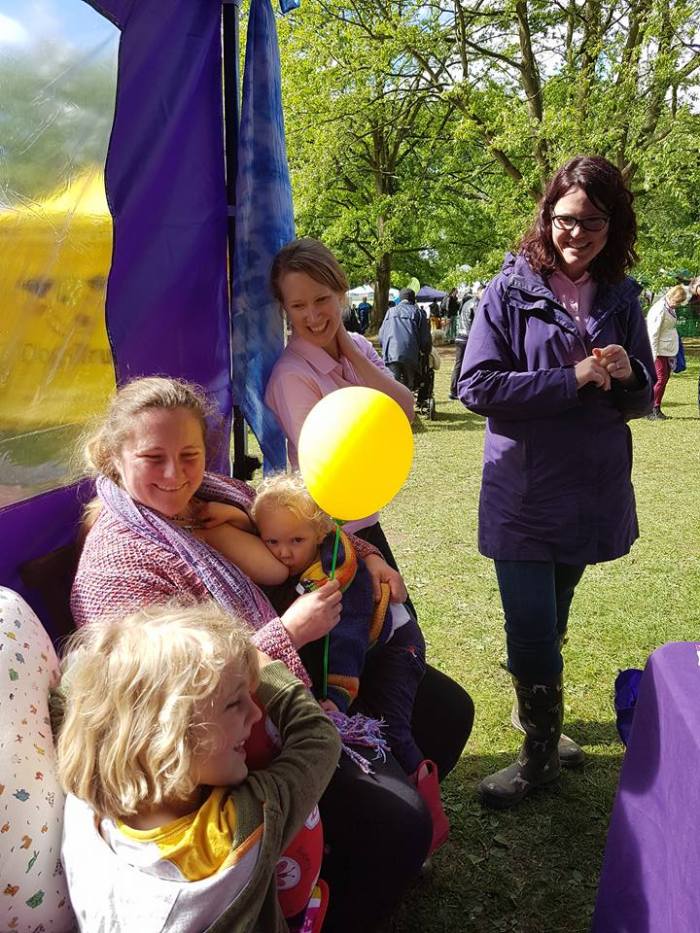
We wanted to make sure mothers knew their rights. We wanted to educate, empower and bring families together. Slowly a community has been born. It kicked off with a picnic to celebrate National Breastfeeding Week, followed by some meetings in a children’s centre. A year passed and having my third baby gave me a huge boost of confidence to put my peer support training into practice. After another season of outdoor gatherings, I hired a room in a community centre. One of the mothers got inspired and started another group in a nearby town, followed by more of them. All were hosted by mothers who breastfed their own babies and felt they could support others and offer a safe space for befriending.

A few months later we decided to organise peer support training. The services offered by the local health visiting team and children’s centres were not sufficient at the time. And there definitely was a niche for peer support. Having experienced first hand how unique it is having another mother support you through hardships, I fell in love with the idea. We approached other service providers using the Maternity Services Liaison Committee. At first, not many believed in us but, as time passed, we proved to be worthy of their trust. We asked for help from generous friends, who delivered the training at no charge, and we found a venue for free thanks to a children’s centre manager. But mostly we were incredibly lucky to recruit, through our groups, amazing women who agreed to offer their time to volunteer in the local hospital.

We decided it was the right time to create something more formal. West Herts Breastfeeders community came to life thanks to the many mothers who nurtured it deeply. This ‘baby’ was very lucky. It was a firstborn who had all the attention and support from local Infant Feeding teams and the Children’s Services department of Hertfordshire County Council. We came a long way. It took us just over a year to train 18 peer supporters, establish six monthly regular meetings in the West Herts area, recruit nearly 550 members to our virtual community to provide them with 24 hour support through Facebook and all that with no official funding. We are all volunteers. You could be too!

Be the Change

As mentioned in the Open Letter of February 2016, organised by the WBTi UK team, a woman’s ability to breastfeed is often determined by the support she receives and the environment in which she lives. While we cannot change everything, we try to help normalise breastfeeding out and about. We also play an important role in normalising feeding older babies and encouraging mothers to carry on, while often dealing with family pressures to wean or the challenges of returning to work. Most children’s centres provide breastfeeding support only in groups for babies under one year, and health visitors do not see mothers as often as they would like. Not having a healthcare professional label also changes the balance of the dialogue and helps mothers to open up.

Together we can do more

What we strive for in the face of recent cuts and challenges is the partnership between all local services. Our success is owed largely to the power of networking. We can see where we are needed most and what else can be done to make sure no woman is left alone at any stage of her nursing journey. You can help to be part of the change, by simply sharing your thoughts with your newly elected MP. Use the WBTi sample email to tell them what breastfeeding mothers need in your local area. Ask them to use their influence on the Local Authority to showcase the importance of breastfeeding to public health and safeguard their budget for health visiting and breastfeeding support.

Your voice matters.


Please sign up HERE to receive email updates on our WBTi work!

Olga Danyluk-Singh photo for community support

Bio

Olga Danyluk –Singh, Chairperson, West Herts Breastfeeders

NHS Breastfeeding Peer Supporter and mother of three breastfed children

Enthusiastic lactivist!
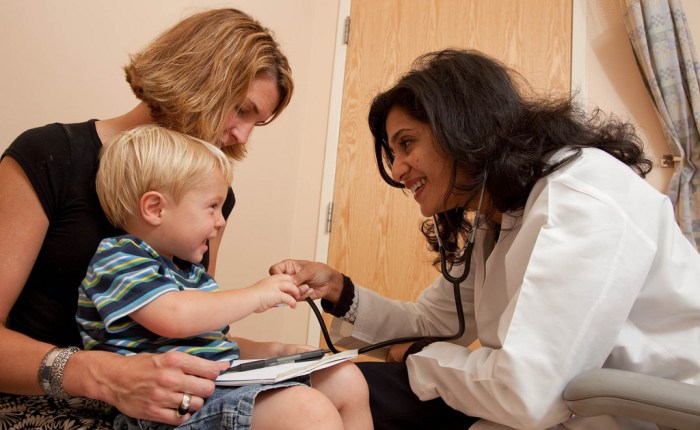
GPs and breastfeeding

GPs and breastfeeding


Doctors have to acquire a huge body of knowledge during training and for general practitioners that knowledge is particularly wide-ranging. Their ten or more years of study comprise undergraduate, foundation and specialism levels of training. As qualified GPs they are likely to have thousands of women patients who, at some stage, are breastfeeding mothers, yet the breastfeeding content of the curriculum is minimal.

Placements in the specialism training may offer useful opportunities to learn from midwives and health visitors about the practicalities of supporting breastfeeding but this is a matter of luck, and the knowledge and skills of those mentors can be variable. It would be much more effective to have a requirement for acquiring basic knowledge and skills specified in the curriculum as well.


GP Infant Feeding Network and resources for GPs

A number of GPs, mothers who in breastfeeding their own babies became acutely aware of the deficiencies in their training, set up the GP Infant Feeding Network, GPIFN, in February 2016. In April 2017 they launched the GPIFN website, a valuable resource for doctors.

Does your doctor know about this website?


Medical training

With regard to medical training (not just GP training), the General Medical Council (GMC) has recently published its Generic Professional Capabilities (GPC) Framework to provide broad outcomes for a consistent approach for postgraduate curricula. The framework was developed in partnership with the Academy of Medical Royal Colleges. Domain 4 (there are 9 domains) looks to be particularly relevant to protecting and supporting breastfeeding as its title is ‘Capabilities in health promotion and illness prevention’.

Royal colleges, such as the Royal College of General Practitioners (RCGP), are responsible for the details of their curricula. They revise them every few years and from the next revision will need to fit with the GPC Framework to be approved by the GMC.

The current standards show several gaps when evaluated by the WHO Education Checklist on infant feeding in the 2016 WBTi assessment of the UK.

Further information about standards for the different health professions can be found in Indicator 5 in Part 2 of the 2016 WBTi report.


Are you a doctor or trainee doctor?

If so, you might like to contact your specialty college asking for the infant feeding content of the curriculum to be improved.


PW Photo for WBTi MAINN presentation

Patricia Wise is an NCT breastfeeding counsellor and a member of the WBTi Steering Group, being the lead for Indicator 5, which is primarily about health professional training.


Cover image  www.stayathomemum.com.au via Szőreg hivatalos honlapja


One key question before the election?

One key question before the election?
By Emma Pickett
Chair, Association of  Breastfeeding Mothers

I imagine like me you have watched some pre-election television debates in the last few weeks. It’s easy to start daydreaming and picture yourself in that audience putting our leaders on the spot. If you had the opportunity to ask that one key question of the main political leaders and get it broadcast on national television, what would you choose to focus on?

For many of us who have been involved in the WBTi project, it’s a no-brainer: What would they do to improve the situation around breastfeeding and infant feeding in the UK?

Except you’ve only got one sentence to outline a situation that took WBTi more than 70 pages.

You’re talking about health care professional training and the international code of marketing of breastmilk substitutes, national leadership, maternity protection in the workplace, data collection. Plus, you are talking to people who don’t even realise there is a problem in the first place or have little understanding of the complexity. There are few soundbites developed for an issue that affects families across the UK and for a situation that many of us see is in crisis.

Breastfeeding is a public health imperative

Politicians are nervous to touch on an issue which they often see as being about individual choice rather than a ‘collective societal responsibility’, as Dr Nigel Rollins described breastfeeding in The Lancet report last year. But when you look at the reality of what is happening in the UK, there is no need to fear having a conversation about breastfeeding. It’s not controversial to be disappointed to hear that 86% of women who stopped breastfeeding in the first two weeks would have liked to have continued for longer. Or 63% of those who stopped before 10 months. It’s especially not controversial when you learn more about the impact of breastfeeding on maternal mental health and its role in reducing inequality.

Which politicians wouldn’t be interested in something UNICEF describe as ‘a natural safety net against the worst effects of poverty’ or a factor shown to have a significant impact on the national economy? We can read through the manifestos of the political parties and see references to obesity and child health and mental health and find ourselves exasperated that infant feeding hardly gets a mention. However, it IS there. In every discussion about fighting inequality or improving chances or protecting the environment or stimulating the economy or supporting parents or focusing on mental health. They just don’t KNOW it’s there.

It is our duty to get this message across.

We may not be sitting in a Question Time audience but we meet our candidates. We have their emails and Twitter accounts. We can speak to them once they are sitting MPs.

Use the WBTi sample email and add your own messages to all the candidates in your own area. What are the gaps in breastfeeding services in YOUR area? Tell YOUR story.

It’s about emphasising why funding matters and why breastfeeding support in the community isn’t a nice optional extra. We are hearing about the huge variation in community-based support across the UK. Cuts to services in England are particularly a worry. Parents are finding groups closing, peer support services disappearing and when they are struggling with more complex problems, there is often nowhere to go. Specialist positions are either being lost or the integration of services means signposting to more qualified breastfeeding specialists such as IBCLCs is confused.

There is no point sighing about the crisis in infant feeding unless we also act. No point in putting a nice meme on your social media account, without also making sure you take 5 minutes to educate a politician who may simply not understand the basics. No point having anger towards our leaders if they are uninformed. WE are the ones who can do the informing: the new parents, the breastfeeding organisations, the healthcare professionals. It’s all too easy for social media to become a place where we all just talk to people who already agree with us. It has never been easier in history for us to directly contact our candidates and politicians. They won’t understand these issues unless we educate them. It starts with one email or one tweet or one conversation.

Have you done it?

For more information about cuts to community breastfeeding services, see WBTi’s 2016 briefing

See the Open Letter signed by dozens of royal colleges, health professional bodies, researchers and voluntary organisations

Responses from political parties

Baby Milk Action have asked all the major political parties about their breastfeeding and infant feeding related policies. You can read their letter, which refers to the WBTi UK report, and the responses they have received here.


Photo credit: Sophie Burrows

Emma PickettEmma Pickett IBCLC is Chair of the Association of Breastfeeding Mothers. She is also an ABM breastfeeding counsellor (www.abm.me.uk) in North London. She has supported breastfeeding mums in Haringey as a volunteer since 2008.
Emma is the author of You’ve Got It In You: A Positive Guide To Breastfeeding  and blogs at Emma Pickett Breastfeeding Support 

What does your doctor know about breastfeeding?

What does your doctor know about breastfeeding?

‘I’m still not convinced breastfeeding 4 year olds should be considered normal!’ – feedback from final year medical student after teaching session

‘Most [UK] pre-registration training for healthcare practitioners who work with mothers, children and young infants has many gaps in the high-level standards and curricula…’ World Breastfeeding Trends Initiative report 2016


As a consultant paediatrician, I deliver a one hour seminar to our medical students several times a term. I have the coveted before-home time slot for ‘essentials of paediatric nutrition’, which aims to encompass the investigation and management of faltering growth, the aetiology and treatment of obesity, and all infant feeding issues. Luckily I talk fast.

Of course, I’m joking.  Covering the syllabus in that time means focusing on key points, and one way I try to do this is encourage the students to set the agenda. At the start of the seminar, I plot out on a whiteboard what they want to get from the session. The students always ask me to cover the different types of formula. In fact, their syllabus emphasises breastfeeding, but their preoccupation is with learning components of, and indications for, breastmilk substitutes. This is manageable rote learning, standard in undergraduate education, easy to put on a flashcard and commit to memory for exams. It also connects to the overwhelming societal perception that formula is the default feed for babies. It is much harder to open up a discussion about breastfeeding and accept that we, as doctors, know almost nothing about it because we aren’t seeing it or learning about it at medical school. Of the twenty or so students in each session, often only one or two have seen a baby breastfed at all. Usually no one in the room has seen a child over the age of one nursing.

The ignorance around breastfeeding continues into our postgraduate curriculum. The ‘breast is best’ message is emphasised (although that has been superseded elsewhere by the ‘breast is normal’ message) but without the backup of grounding in lactation physiology and how our profession contributes to what I think of as ‘iatrogenic low milk supply’ – medical practices such as separating mother and baby, delaying the first feed, not respecting the importance of skin to skin, feeding on an artificial schedule,  wrongly assuming that maternal and infant medical conditions and medication preclude breastfeeding…  Without understanding the science, doctors will always resort to what they have seen before, are comfortable with, and believe to be normal. At the moment, that is usually formula feeding.

Screen Shot 2017 wbti ind 5 full slide


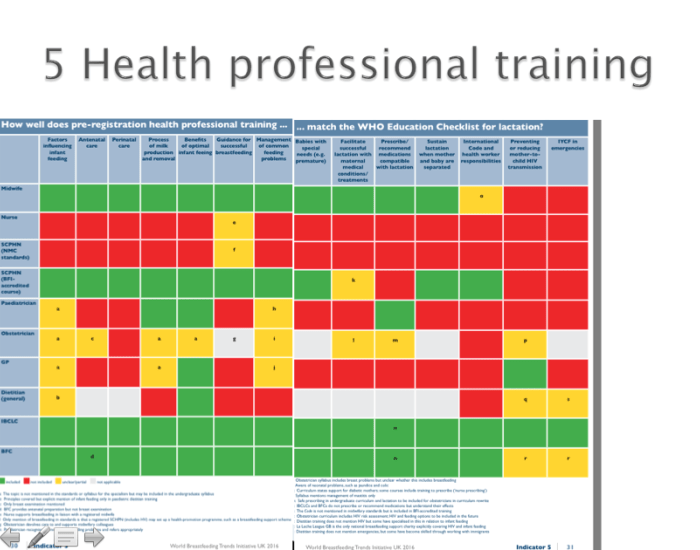
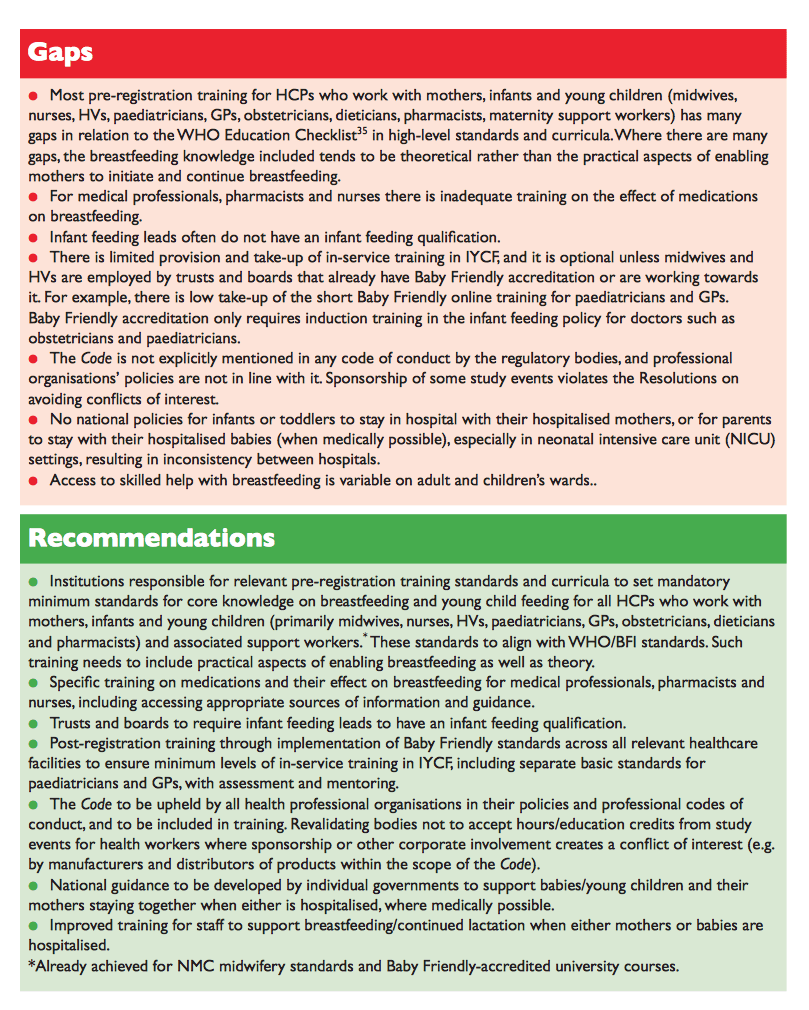
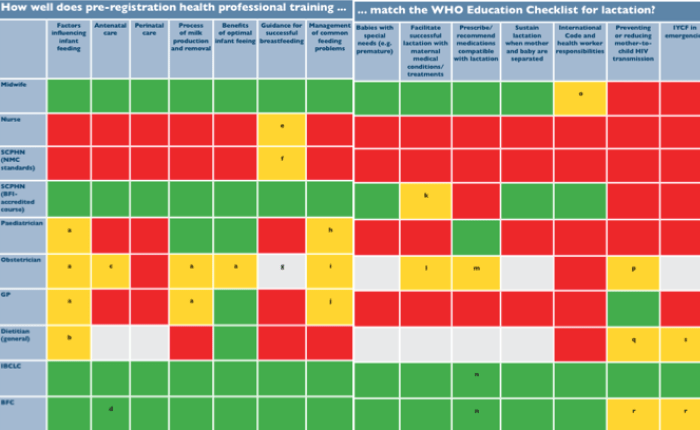
The World Breastfeeding Trends Initiative report flags up the holes in training for healthcare practitioners – illustrated here, the universal minimum pre-registration standards set by the GMC, the NMC and the BDA – and my experience echoes that (see Indicator 5, in Part 1 and Part 2, online). Our doctors need to realise what they don’t know about breastfeeding before they can start to learn. Recognising this is the first step on a very long road, but it is at least a step forward.

Victoria Thomas


Dr Vicky Thomas is a consultant paediatrician at the Great North Children’s Hospital in Newcastle upon Tyne. A generalist at heart, she has developed an interest in growth and nutrition and is passionate about the role of breastfeeding in optimising child health.

Happy 6 month anniversary to us!

Happy 6 month anniversary to us!

WBTI reports
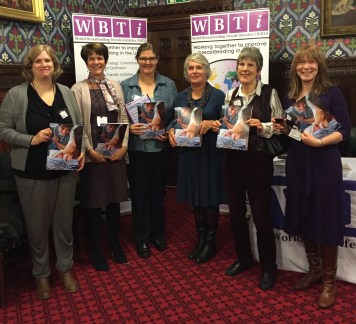
The first WBTi assessment of the UK was launched 6 months ago today in Parliament, hosted by Alison Thewliss MP, chair of the Infant Feeding and Inequalities All Party Parliamentary Group.

Huge thanks to Alison and the APPG, and to all the amazing organisations in our Core Group who worked together to identify gaps in UK policy and programmes in infant feeding, and to jointly generate recommendations for Action!

The Core Group of organisations and agencies involved in various aspects of infant and maternal health and infant feeding identified gaps in UK policy and programmes and generated joint recommendations for action.

 wbti-core-group-2015.png

WBTi Core Group:
Association of Breastfeeding Mothers (ABM)
Baby Feeding Law Group (BFLG)
Baby Milk Action
Best Beginnings
Breastfeeding Network (BfN)
Child and Maternal Health Observatory (CHIMAT) Department of Health
First Steps Nutrition
Institute of Health Visiting (iHV)
Lactation Consultants of Great Britain (LCGB)
La Leche League GB (LLLGB)
Maternity Action
Northern Ireland infant feeding lead
NCT
National Infant Feeding Network (NIFN)
Public Health England (PHE)
Scotland Maternal and Infant Nutrition Coordinator Start4Life
Unicef UK Baby Friendly Initiative


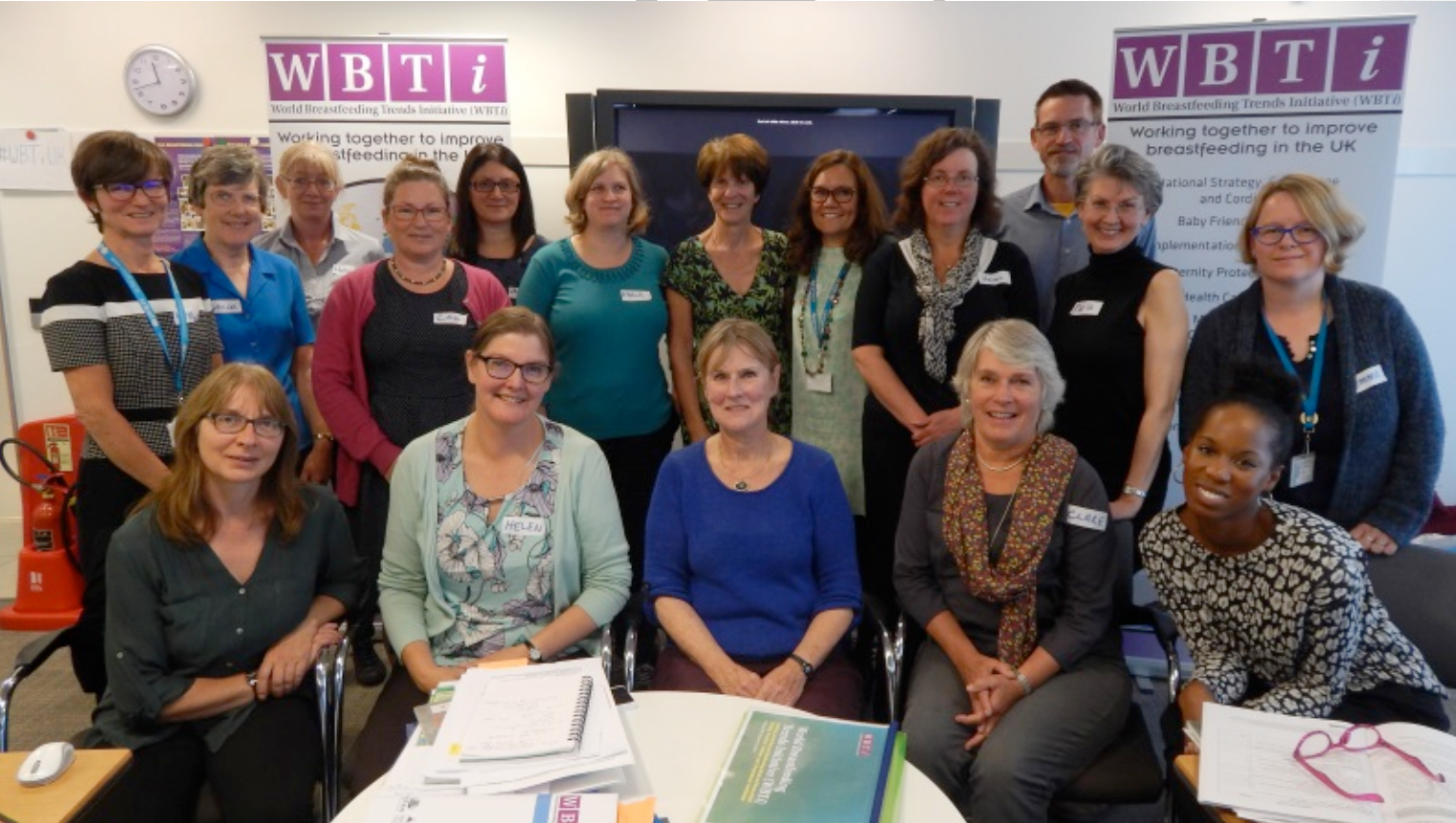
WBTi Steering Group and main authors:
WBTI steering group

From left to right:
Ayala Ochert, Alison Spiro, Helen Gray, Clare Meynell, Patricia Wise, Liz McGregor

Who knows breast: GPs, Midwives, Health Visitors, Paediatricians, Obstetricians, Friends, Family?

Who knows breast: GPs, Midwives, Health Visitors, Paediatricians, Obstetricians, Friends, Family?

By Kate Butler

Peer Supporter, West Hertfordshire Hospitals NHS Trust

As a mum embarking on a new breastfeeding journey with their baby, who could she turn to for support and advice that she can trust? How would she know that what she’s doing is “right”, that her baby’s behaviour is “normal”? Her midwife? GP? Obstetrician? Paediatrician? Health Visitor? Surely the advice and support you get from a qualified and trained healthcare professional can be trusted? The findings from the World Breastfeeding Trends Initiative (WBTi) UK 2016 Report (published November 2016) may surprise you.

Screen Shot 2017 wbti ind 5

Health professional training in the UK

The WBTi UK Report (WBTi UK 2016) was based on the WBTi toolkit developed by the International Baby Food Action Network (IBFAN) to help countries evaluate breastfeeding policies and practices in a systematic way. One area that the report focuses on is health professional training and subsequent impact on breastfeeding initiation and continuation rates across the UK. Worryingly the report highlights many gaps in the pre-registration training of some healthcare professions in the area of infant and young child feeding, particularly in the practical aspects of enabling mothers to initiate and continue breastfeeding. Following qualification, healthcare professionals are then expected to undertake in-service training in infant and young child feeding. The WBTi UK Report reveals that provision and uptake of these courses is limited.

So what does this mean? The very healthcare professionals our new mums ought to be able to trust to give them the right advice may not be the right source of information to enable a mum to breastfeed successfully. It’s through no fault of the healthcare professional, but rather the fault of how their initial training and ongoing training is structured. Therefore their advice and support might often based on personal experiences and/or out of date practices. Not only that but our healthcare professionals also have to work in line with their own NHS trust policies. These differ between trusts and are based not only on NICE guidelines but also considerations such as the skill set of staff and trust finances.

Breastfeeding rates are dropping off drastically after birth

The issue with all this? Published in November 2012, the 2010 Infant Feeding Survey showed that the initial breastfeeding rate in the U.K. was 81%. Across the UK, at three months, the number of mothers breastfeeding exclusively was 17% and at four months, it was 12% (Infant Feeding Survey 2010). However, exclusive breastfeeding at six months is only around 1%. But with the infant feeding survey being cancelled last year and lack of any national leadership or strategy in infant feeding, what hope do we have to improve these figures? What hope do we have of changing the way our health professionals are trained and how their on-going training is structured?

Some people might ask what’s wrong with these figures presented above. In doing so, they reflect a society, our society, in which formula feeding has become normalised. Where friends and family see formula as “just as good” as breastmilk and don’t have their own personal experiences of breastfeeding in order to support new mothers. The World Health Organisation recommends exclusive breastfeeding up to 6 months of age, with continued breastfeeding along with appropriate complementary foods up to two years of age or beyond. It is not within the scope of this post to explore the reasons behind this recommendation, more this article is to raise the issue that breastfeeding families have a dwindling pool of resources from which to obtain support during their breastfeeding journeys. Breastfeeding families are unlikely to be able to rely on advice from healthcare professionals, friends or family. That’s a lonely existence.

How can we change society and health care for new mothers and babies?

All is not lost though. The Unicef Baby Friendly Initiative, launched in the U.K. in 1995 (Unicef UK Baby Friendly Initiative 1995), is based on a global accreditation programme of UNICEF and the World Health Organisation. It is designed to support breastfeeding and parent infant relationships by working with public services to improve standards of care. Maternity units and community facilities have the option to become Baby Friendly accredited and in order to do so are required to provide training for its midwives and health visitors. While the majority of maternity units (91%) and health-visiting services (83%) have achieved or are working towards Baby Friendly status, the remainder have not commenced the process. Therefore new breastfeeding mums can hope that the situation is improving and healthcare professionals that have undergone Baby Friendly training will start to provide the trusted information that mums deserve. But this will require quite a culture shift change within the NHS and this will take time.

There is also lots to be done with the image of, and marketing of infant milk so that “normal infant feeding” moves away from formula and focusses on breastfeeding.

Our society needs educating and this will also need the support and investment from the government.

wbti-ind-5-gaps-recs.png

For further information on how mums can find the most appropriate support right now for their breastfeeding journey, visit http://www.lcgb.org/why-ibclc/whos-who-in-breastfeeding-support-and-lactation-in-the-uk/


Kate ButlerKate Butler is a Secondary School Biology teacher by day and mother to two boys (aged 1 and 3) day and night. She trained as a breastfeeding peer supporter in 2013 and since then has set up local peer support meetings in her local area and joined the committee of West Herts Breastfeeders to support with fundraising and event management. West Herts Breastfeeders is a community based mum to mum peer support group that supports breastfeeding families with their breastfeeding journeys in the community and within West Hertfordshire Hospitals NHS Trust. This post was first published on Kate’s blog, The Instinctive Parent (www.theinstictiveparent.org), which she started to share knowledge and help further educate parents to help them make properly informed decisions and choices in how they choose to parent.


 

References

Infant Feeding Survey 2010 [ONLINE] Available at: http://www.content.digital.nhs.uk/catalogue/PUB08694/Infant-Feeding-Survey-2010-Consolidated-Report.pdf [Accessed 30/13/16]

UNICEF Baby Friendly Initiative 1995 [ONLINE]  https://www.unicef.org.uk/babyfriendly/what-is-baby-friendly/ [Accessed 30/12/16]

WBTi UK Report 2016 [ONLINE] Available at: https://ukbreastfeeding.org/wp-content/uploads/2016/12/wbti-uk-report-2016-part-1-11-12-16.pdf [Accessed 30/12/16]

World Health Organisation [ONLINE] Available at: http://www.who.int/topics/breastfeeding/en/ [Accessed 30/12/16]

Breastfeeding at work – a gap in maternity rights

Breastfeeding at work – a gap in maternity rights

By Rosalind Bragg

Director, Maternity Action

Providing women with a clear legal right to continue breastfeeding on return to work should be a no-brainer for the UK Government. The Department of Health recommends that babies are exclusively breastfed for six months and then breastfed in conjunction with solid food, mirroring the World Health Organisation position. Bringing employment law into line with public health recommendations should be a simple matter, yet the Government continues to drag its heels.

A quick glance at maternity protections in other European countries, shows that the UK is something of an outlier. Breastfeeding breaks are enshrined in law in 36 of the European countries surveyed and the vast majority of these breaks are paid. The UK, by comparison, has no statutory right to breastfeeding breaks, paid or unpaid.

Current legal protection for breastfeeding

This is not to say that there is no legal protection for breastfeeding in the UK. It is possible, in some cases, to use health and safety law to argue for working arrangements which facilitate breastfeeding. The recent EasyJet case is an example of this. Women can also make a flexible working request for changes to their working hours and conditions which allow them to breastfeed. But flexible working requests can be refused by the employer and the health and safety protections are limited in their scope. For many women, the current legal framework does not deliver the protection they require.

When Maternity Action has raised our concerns with Government, we have often been reminded about the generous period of maternity leave in the UK. We are certainly appreciative of the 12 months leave entitlement, but we are also very aware that there are very good reasons why women would return to work without taking their full year of leave. UK statutory maternity pay is quite modest by international standards. After six weeks at 90% of income, it drops to the low flat rate of £140 per week for 33 weeks, which is below the minimum wage.

Maternity Discrimination

Maternity pay is not the only factor leading to women taking less than their 52 weeks of maternity leave. High rates of maternity discrimination are prompting women to return early out of fear for their job. The introduction of Shared Parental Leave has enabled women to share up to 50 weeks of their maternity leave with their partners. There are also many women working in the gig economy who don’t have leave entitlements, placing their livelihood at risk if they take extended breaks.

Support the Action Plan from the Alliance for Maternity Rights

Maternity Action fed our concerns about workplace maternity protections into the WBTi report for the UK. We have also incorporated the call for a statutory right to breastfeed at work into the Action Plan developed by the Alliance for Maternity Rights, a coalition of parenting groups, unions, advice services and health professionals convened by Maternity Action which works to end maternity discrimination. We held a series of Parliamentary events to give profile to our call for action on maternity rights at work.

Following the announcement of the general election, Maternity Action produced a manifesto calling for each of the political parties to protect maternity rights. Key amongst our manifesto asks is a statutory right to breastfeed in the workplace. The election offers a good opportunity to raise the profile of this issue with Parliamentarians. You can help by contacting candidates in your area, asking them to commit to support the manifesto. You can email your candidate through Maternity Action’s website and find other candidates online. Protecting breastfeeding rights should be a no-brainer.

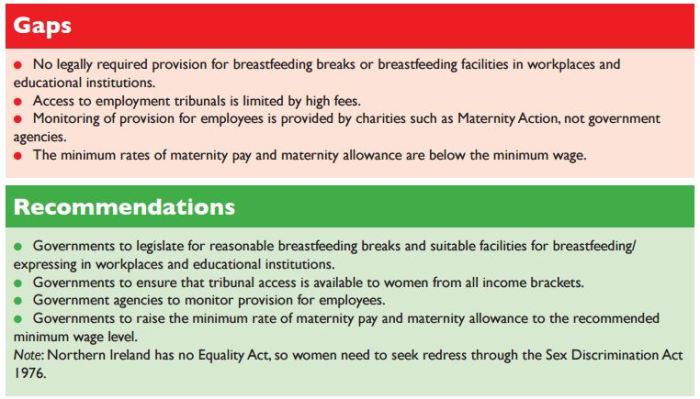
WBTI UK Report: Gaps and Recommendations on Maternity Protection in the Workplace

Ind 4

RosPhoto2015

Rosalind Bragg is the Director of Maternity Action, a national charity advising pregnant women, new mothers and their families about rights at work, the benefits system, breastfeeding rights and access to support services.  Since she joined the organisation in 2008, she has led campaigns to challenge pregnancy discrimination at work, improve support for asylum seeking women and to ensure access to maternity care for vulnerable migrant women.

Rosalind has worked in policy and management roles in the voluntary sector and civil service in the UK and Australia focusing on social justice and human rights.  She has worked predominantly in the areas of employment, health and migration.

For mothers, for babies and for society

For mothers, for babies and for society

WBTi UK Report 2016 – Key findings and what you can do to help

Breastfeeding matters for mums, babies and society.

The WBTi report for the UK shows key gaps and recommendations for improvement in how all of society — the UK Government, national assemblies, local commissioners,  friends, family and community — needs to support mothers who want to breastfeed and the healthcare professionals who help them.

In order for this to happen, we need MPs to be aware of the report and recommendations, so that they carry the message to Parliament, and start the change so desperately needed.

MPs are there to listen to your concerns and to represent you in Parliament. Our video explains what the key messages are from the WBTi 2016 Report on the UK, and what we can all do together to make changes happen.


We need YOUR help now in this social media campaign with our video.  You can;

  • Take the report and its recommendations to your local MP
  • Tag a friend on our Facebook video launch post, like and share the post
  • Write to your MP or make an appointment to meet them
  • Post a selfie on our video launch post with the hashtags #breastfeedingmatters and #bfaction to raise awareness on social media and help us make this change

If you have breastfed your own children, if you had hoped to breastfeed but didn’t get enough support, or if you are a health care professional or volunteer supporting breastfeeding women, please get involved.

For a step-by-step guide see our campaign:

http://www.babymilkaction.org/wbtiuk-mps0217

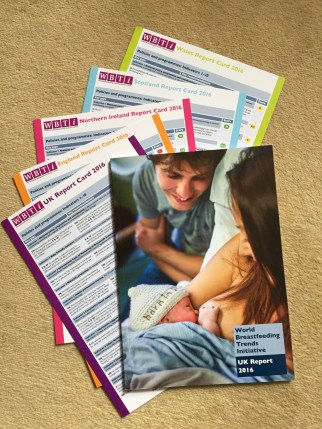
For more information on the report, to donate, and to download our FREE report cards to give to your MP:
https://ukbreastfeeding.org/wbtiuk2016/


For more information on the work of Baby Milk Action and to sign up to support them
 http://www.babymilkaction.org/
UNICEF Baby Friendly Initiative
https://www.unicef.org.uk/babyfriendly/

The Code: Protecting ALL babies

The Code: Protecting ALL babies

Protecting babies from commercial pressures –

WBTi Indicator 3

#WBTi3

#ProtectAllBabies

Babies are vulnerable, so it’s crucial that decisions about how they are fed are made objectively, not influenced by advertising or other marketing ploys such as price reductions. Also, babies have a single source of nourishment – milk – in the first few months so it’s essential it’s of high quality. For breastfed babies, the mother’s body ensures quality, tailored to her baby’s needs. For infant formula you’d expect regular independent testing to ensure quality. But such testing very rarely happens!


To address this, Alison Thewliss MP introduced her Feeding Products for Babies and Children (Advertising and Promotion) Bill to Parliament in November 2016. The aim of the Bill is to set standards for infant feeding products aimed at babies and children up to 36 months, and their marketing, with penalties for advertisers and promoters who do not meet the standards.

http://services.parliament.uk/bills/2016-17/feedingproductsforbabiesandchildrenadvertisingandpromotion.html


The 2nd reading of the bill is timetabled for 24 March. If this Bill is to progress MPs need to support it. That means they need to understand the damage infant formula marketing can do, by influencing and thus restricting choice, especially when promotion is misleading and labelling confusing. Will your MP support the Bill?


Concurrently, Baby Milk Action is producing a detailed UK monitoring report to show that the formula industry needs to be regulated better to protect babies fed on formula. It includes profiles of the relevant companies, an explanation of the International Code and Resolutions, analysis of changes needed in the UK Law and a summary. It’s therefore a valuable source of evidence.

http://www.babymilkaction.org/monitoringuk17

Further information about the composition of formula milks, ingredient claims and costs are available from the charity First Steps Nutrition: http://www.firststepsnutrition.org/newpages/Infant_Milks/infant_milks.html

WBTi report gaps and recommendations for the UK
Indicator 3: Implementation of the International Code

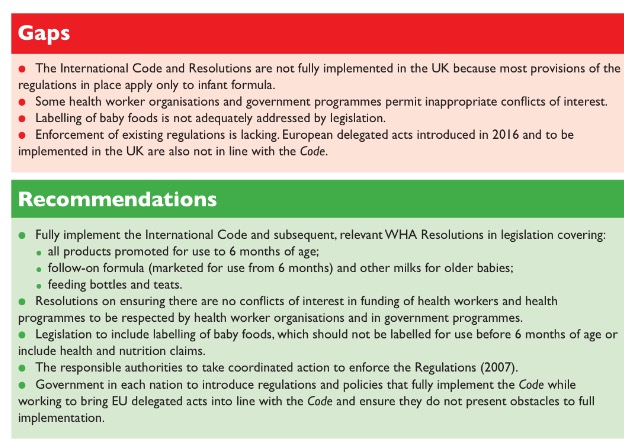
WBTi 3 GapsRecs

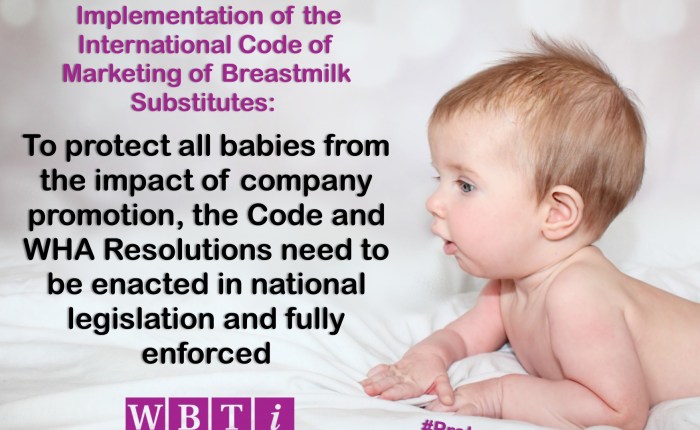
These actions work towards implementing recommendations of Indicator 3 of the WBTi report, recommendations which include full implementation of the Code and Resolutions and coordinated enforcement. These changes would help to protect both babies fed on formula and breastfed babies, improving public health.

https://ukbreastfeeding.org/wp-content/uploads/2017/03/wbti-uk-report-2016-part-1-14-2-17.pdf


What you can do

  1. 1. Ask your MP to attend the 2nd reading of the Bill on 24th March. http://www.babymilkaction.org/archives/12254

  2. Raise awareness of the monitoring report as evidence for the need for better formula industry regulation.  http://www.babymilkaction.org/monitoringuk17


Mothers’ voices #BeBoldForChange

Mothers’ voices #BeBoldForChange

#BeBoldForChange International Women’s Day

Mothers have been boldly calling for change, change in the support they need to breastfeed their babies, change in the conversation around breastfeeding. Fathers, partners, health professionals and volunteers have been boldly speaking up in support.

2016 and 2017 has seen lots of activity in the “breastfeeding world”; not that this is a mythical place where breastfeeding is seen as the norm. It’s a real place, just sadly a relatively small world at the moment. We’ve seen a new books on the subject published, we’ve seen campaigns launched, groundbreaking research and reports published, adverts made and most recently a new Bill proposed in Parliament. Any why so much action? Because breastfeeding should be the norm – I’ll go all Biology teacher here and state the obvious – we’re mammals, we have mammary glands in order to be able to feed our young. The breastfeeding world should be everyone’s world.

In recognition of International Women’s Day today, now is the time to #BeBoldForChange (International Women’s Day 2017). Everyone should know about breastfeeding, everyone should feel happy to talk about it, and everyone should feel properly supported about how they choose to feed their baby.

8 out of 10 women stop breastfeeding before they want to (McAndrew et al 2012). There are many reasons for this but Unicef only last week highlighted yet more research showing that breastfeeding support can increase the duration and exclusivity of (Unicef 2017). The World Breastfeeding Trend Initiative UK report (WBTi UK 2016) published in November last year reinforced these findings by identifying a key gap with many mothers lacking access to skilled breastfeeding support. So if mothers aren’t getting support from skilled and trained volunteers or professionals, where is their support coming from?

The current reality is that we live in a society with a formula feeding culture. What does that mean? It means our society sees formula feeding as normal, “just as good” as breastmilk. This is further entrenched in our minds through the media, online, in papers, on television. Families just don’t get the opportunity to make fully informed decisions about how they wish to feed their child because expectations and methods of infant feeding are so ingrained in our culture. “Helpful” friends and family want to support a family’s choice in how they choose to feed their baby but often they have not breastfed so advice can often undermine a family’s breastfeeding journey. Our formula feeding culture is not through the fault of any individual mother or indeed individual healthcare professionals. It’s the result of government not listening to society’s needs; it’s the fault of unscrupulous formula and bottle companies with some pretty amazing marketing strategies. I used to work in marketing – these formula campaigns are ruthless! The Politics of Breastfeeding (Palmer 2009) and Breastfeeding Uncovered (Brown 2016) are fabulous reads if you want to delve further into the impact of politics and commercial interests on breastfeeding.

So what change do we need? On International Women’s Day?

Fundamentally we all – families, supporters, employers, health professionals, politicians – we need to listen to the woman’s voice, the mother’s voice. The mother asking for support and the mothers who can offer the support. We need to celebrate the voices and the hard won wisdom of mothers who have had successful breastfeeding journeys, who have managed to overcome the many challenges they faced. Families who plan to breastfeed need to know what is normal. Many breastfeeding mums ARE happy to talk about their experiences and support and help other mums. But many shy away for fear of stimulating the breast vs. formula debate, the “mummy wars” that are so often fuelled by both the strong feelings of mothers who have been let down, and the deep pockets of the baby feeding industry. Very often the mums who formula feed have done so because they’ve been let down by gaps in the support around them. As mentioned before 8 out of ten women give up breastfeeding before they are ready to and many are not happy about it; this can even lead to an increased risk of postnatal depression (Borra et al; Brown et al). It’s not their fault but the guilt can lead to defensive conversations about how they feed their baby. It therefore shuts down the conversation around breastfeeding and we’re back to square one. These issues are what inspired UNICEF’s ongoing #changetheconversation campaign launched last year (Unicef Baby Friendly Initiative 2016).

Social media is full of private groups where breastfeeding mums have a “safe” place to share and support each other in their breastfeeding journeys without fear of upsetting mums who are not breastfeeding. But why should this be done in private? Why shouldn’t breastfeeding mums shout from the roof tops? It’s great to see that the government’s Start4Life campaign have recently requested to hear from breastfeeding mothers about their stories (Start4Life 2017). It’s a small step but one that may prove powerful. What we really need is to educate our children and our society on breastfeeding. I’m not just saying this because I’m a teacher, but if our children don’t know about it, what hope have we got to normalise it? Breastfeeding families also hold a special role, not shying away from sharing their experiences, but being bold for change and sharing what’s normal in the hope that we can normalise breastfeeding and make our “small” breastfeeding world everyone’s world.

Let’s celebrate the strength of mothers everywhere.

#BeBoldForChange


References

Borra C, M Iacovou and Q Sevilla 2014 New Evidence on Breastfeeding and Postpartum Depression: The Importance of Understanding Women’s Intentions Matern Child Health J DOI 10.1007/s10995-014-1591-z

Brown A, J Rance and P Bennett 2016 Understanding the relationship between breastfeeding and postnatal depression: the role of pain and physical difficulties. Journal of Advanced Nursing Volume 72 (2):273–282 DOI: 10.1111/jan.12832 [Accessed 6/3/2017]

 Brown, A. (2016) Breastfeeding Uncovered, Pinter & Martin Ltd 2016

International Women’s Day 2017 https://www.internationalwomensday.com/

McAndrew F, Thompson J, Fellows L, Large A, Speed, M and Renfrew M (2012) Infant Feeding Survey 2010. The Information Centre for Health and Social Care. Available at http://www.esds.ac.uk/doc/7281/mrdoc/pdf/7281_ifsuk-2010_report.pdf

Palmer G 2009 The Politics of Breastfeeding: When Breasts are Bad for Business, Pinter & Martin Ltd.; 3rd Revised edition (29 April 2009)

Start4Life 2017 https://www.facebook.com/Start4LifeInformationServiceForParents/?fref=nf

Unicef UK Baby Friendly Initiative 2017 Supporting Breastfeeding https://www.unicef.org.uk/babyfriendly/supporting-breastfeeding-make-it-happen/

Unicef UK Baby Friendly Initiative 2016 https://353ld710iigr2n4po7k4kgvv-wpengine.netdna-ssl.com/babyfriendly/wp-content/uploads/sites/2/2016/04/Call-to-Action-Unicef-UK-Baby-Friendly-Initiative.pdf

WBTi UK Report 2016 [ONLINE] Available at: https://ukbreastfeeding.org/wp-content/uploads/2016/12/wbti-uk-report-2016-part-1-11-12-16.pdf [Accessed 30/12/16]