Infant Feeding in Emergencies – Resources for supporting families from #Ukraine #IYCFE

Infant Feeding in Emergencies – Resources for supporting families from #Ukraine #IYCFE

Our WBTi work has revealed that in the UK we have no national guidance on the support and feeding of infants and young children, or pregnant or breastfeeding mothers, during emergencies. There is currently a postcode lottery of Local Resilience Forums who include a few details in their advice to the public such as “Remember to pack formula and nappies for your baby”, but there is no national guidance for LRFs and local authorities that they should include infants and young children in their planning.

This page will serve as a repository for resources for those planning services and those providing feeding support for Ukrainian families with infants and young children.

Breastfeeding provides infants with food security, immune protection, and emotional comfort during disasters.
Basic priorities in an emergency:

1) Support new mothers to hold their babies skin to skin and begin breastfeeding within the first hour.

2) Support mothers who are breastfeeding, partially or fully breastfeeding, to continue breastfeeding and increase their milk supply if needed: provide access to skilled feeding support.

3) Protect infants who are not breastfed: Trained infant feeding / nutrition support teams from trusted NGOs like UNICEF will provide access to safe supplies of appropriate infant formula for babies that need it, and support with safe preparation under hazardous conditions.

4) Protect all infants: breastmilk substitutes and feeding equipment (infant formulas and other milks, bottles, teats, breast pumps and also donor human milk) will be provided by trusted NGOs like UNICEF; the public should AVOID sending donations of these into high risk settings, but send donations of funds to trusted NGOS instead. This will enable them to provide families with what is needed on the ground.
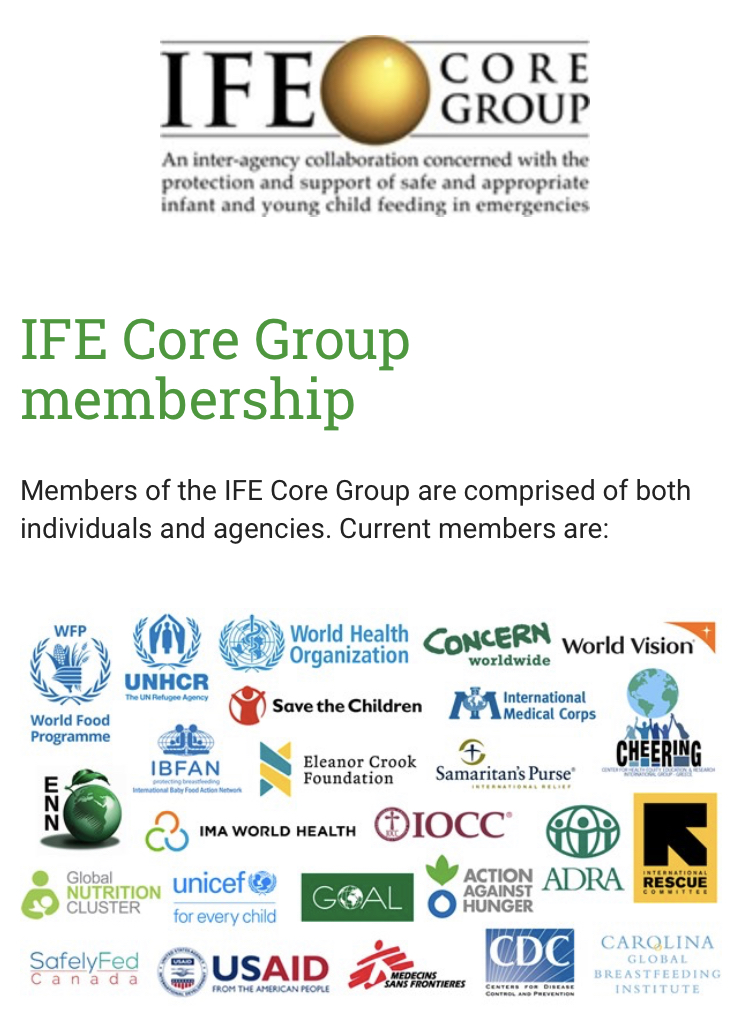
These organisations are members of the Infant Feeding in Emergencies Core Group and have created the international Operational Guidance on Infant Feeding in Emergencies. Please consider supporting their work with families with infants and young children.

We have collected links to infant feeding resources in Ukrainian, and also in the languages of countries housing refugee families, for breastfeeding helpers and aid workers in those countries.

Please send us any suggestions for additional resources

We have a few other resources not included here; please email us any enquiries.

NOTE: we will continue to add links and resources to this page, and these organisations are continuing to add further translations into more languages – please make sure that you clear your cache, or ‘refresh’ the page, each time you open any of these links to ensure that you find the most up to date page.

NOTE: We are providing these resources as a public service, but we cannot read the resources in other languages ourselves, so we cannot always vouch for the accuracy of the contents. Please have someone fluent in the language read it for you.

CONTACT: wbti@ukbreastfeeding.org

WHERE TO START? Watch this 4 minute introductory video from Save the Children

Aid worker or emergency planner? Short video here: how can you incorporate best practice into your support for Ukrainian families?

GET INFORMED: Read the first 25 pages of the Guidance for an overview of best practice.

Resources from the Global Breastfeeding Collective, led by WHO and UNICEF

It is important to continue breastfeeding if you are COVID positive: your milk can pass antibodies to your baby! More resources HERE.

UNICEF UK Baby Friendly resources

Guidance for local authorities on infant feeding during COVID19 (from BFI, First Steps Nutrition Trust, and NIFN). First line guidance for UK local authorities responsible for supporting families

The provision of formula in food banks (November 2020)

Statement on infant formula in food banks (November 2020) – signposting

See also the response to Question 11 on formula donations and distribution in their FAQ here

International humanitarian guidelines and operational guidance

Sphere Handbook

Operational Guidance on Infant feeding in Emergencies
for Emergency Relief Staff and Programme Managers

Available in numerous languages

Media Guide and Guide on writing/ talking about infant feeding in emergencies
These are extremely useful for humanitarian aid organisations and for the media in framing the situation

Guidance for helpers not trained in supporting infant feeding

This short leaflet was written for local authorities and those supporting Afghan refugee families but could be useful for those supporting Ukrainian refugees in the UK. It sets the context, lists some useful resources for parents, provides information about making up powdered infant formula correctly and describes useful actions in some possible scenarios.

Infant feeding support resources – multiple languages

Rapid Feeding Assessment Key Phrases in multiple languages (including Ukrainian, Russian, Romanian, Polish and English – scroll down the page)

Simple Points for Helpers – infant feeding in emergencies in multiple languages (including Ukrainian, Russian, Romanian, Polish and English – scroll down the page)


Pictorial counselling cards in many languages including Russian, adapted to include COVID19 recommendations. Some are full pictorial sets, while some are simply the translation matrix.

Infant Feeding flyer for families in transit (including English, Ukrainian, Polish, Russian, updated for COVID19). Developed by the volunteer team from Infant Feeding Support for Refugee Children/ Safely Fed

Posters and booklets in Ukrainian hosted by the Lithuanian IBCLC Association

Pictorial book about breastfeeding (no words) from La Leche League Netherlands. The PDF is free to use for all. Printing and sharing is allowed, as long as the original file (including credits) is unaltered. Price listed on website is for printed version.

Breastfeeding resources in multiple languages including Ukrainian, Romanian, Russian. (From the Missouri Department of Health and Senior Services, USA)

Breastfeeding Matters – A Guide to Breastfeeding for Women and their Families (from best Start, Ontario Canada) can be downloaded free in Russian and other languages

Translations of key phrases, breastfeeding infographics in many languages, and more: Safely Fed European resources

La Leche League International: Variety of resources and infographics in infant feeding in emergencies translated into multiple languages – most are directed at mothers and parents

Global Health Media: Videos on childbirth and breastfeeding topics.

Infant Feeding in Emergencies Social Media resources:

Infant Feeding Support for Refugee Children Facebook Page: Memes/ graphics in multiple languages, with appropriate captions

La Leche League International Facebook page: Memes/ graphics in multiple languages, aimed at mothers and parents

Safely Fed UK Facebook page – volunteers welcome to create graphics in Canva and to monitor the page! Contact WBTi UK: wbti@ukbreastfeeding.org

For policy makers, emergency planners, media and humanitarian aid workers

Policy resources, media guide, training materials: Infant Feeding in Emergencies Core Group

IYCFE Hub: global hub of resources

Background information on breastfeeding in Ukraine: WBTi 2015 Ukraine Assessment Report

Policy resources, translations of key phrases, and more: Safely Fed European resources

Please do contact us if you are interested in volunteering or have some useful resources to share!!

CONTACT: wbti@ukbreastfeeding.org

Helen Gray MPhil IBCLC is Joint Coordinator of the WBTI UK Steering Team, and Policy and Advocacy Lead at Lactation Consultants of Great Britain. Her research interests include human rights and infant and young child feeding in emergencies.

Infant Feeding in Emergencies – Resources for supporting #Afghan families #IYCFE

Infant Feeding in Emergencies – Resources for supporting #Afghan families #IYCFE

Our WBTi work has revealed that in the UK we have no national guidance on the support and feeding of infants and young children, or pregnant or breastfeeding mothers, during emergencies. There is currently a postcode lottery of Local Resilience Forums who include a few details in their advice to the public such as “Remember to pack formula and nappies for your baby”, but there is no national guidance for LRFs and local authorities that they should include infants and young children in their planning.

This page will serve as a repository for resources for those planning services and those providing feeding support for families in crisis in the UK.

Currently there are many gaps in the support for families who have been evacuated from Afghanistan, so resources in Afghan languages are collected here.

Please send us any suggestions for additional resources

We have a few other resources not included here, including Rapid Assessment Tools and Simple Phrases about feeding, and a Peer Counsellor Training Curriculum in Dari; please email us any enquiries.

CONTACT: wbti@ukbreastfeeding.org

NOTE: We are providing these resources as a public service, but we cannot read the resources in other languages ourselves, so we cannot always vouch for the accuracy of the contents. Please have someone fluent in the language read it for you.

UNICEF UK Baby Friendly resources

Guidance on infant feeding during COVID19 (from BFI, First Steps Nutrition Trust, and NIFN)

First line guidance for local authorities responsible for supporting families

The provision of formula in food banks (November 2020)

Statement on infant formula in food banks (November 2020) – signposting

See also the response to Question 11 on formula donations and distribution in their FAQ here

International humanitarian guidelines and operational guidance

Sphere Handbook

Operational Guidance on Infant feeding in Emergencies
Operational Guidance for Emergency Relief Staff and Programme Managers
Available in numerous languages

Guides on writing/ talking about infant feeding in emergencies and Media Guide
These are extremely useful in framing the situation

Guidance for helpers not trained in supporting infant feeding

This short leaflet sets the context, lists some useful resources for parents, provides information about making up powdered infant formula correctly and describes useful actions in some possible scenarios.

Infant feeding resources – multiple languages

Rapid Assessment tools in various languages – contact wbti@ukbreastfeeding.org

Infant Feeding Counselling resources
Pictorial counselling cards in many languages, adapted to include COVID19 recomendations

Infant Feeding flyer for families in transit (English, Arabic, Farsi, Kurdish)

Developed by the volunteer team from Infant Feeding Support for Refugee Children/ Safely Fed

Email us for more languages

Pictorial book about breastfeeding (no words) from La Leche League Netherlands

The PDF is free to use for all. Printing and sharing is allowed, as long as the original file (including credits) is unaltered. Price listed on website is for printed version.

Breastfeeding resources in multiple languages (Missouri Department of Health and Senior Services, USA)

Infant Feeding in Emergencies Social Media resources:

Support for Refugee Children Facebook Page
Memes/ graphics in multiple languages, with appropriate captions

Safely Fed UK Facebook page – volunteers welcome to create graphics in Canva and to monitor the page! Contact WBTi UK: wbti@ukbreastfeeding.org

Resources in Afghan languages: Dari and Farsi

Background information on breastfeeding in Afghanistan: WBTi 2019 report on Afghanistan

Pictorial counselling cards for Afghanistan, in Dari

Infant Feeding flyer for families in transit: versions in Farsi and English

Developed by the volunteer team from Infant Feeding Support for Refugee Children/ Safely Fed

Breastfeeding Confidence booklet by the Australian Breastfeeding Association, in Dari

Video from UNICEF in Dari

Breastfeeding Matters – An Important Guide to Breastfeeding for Women and their Families (from best Start, Ontario Canada) can be downloaded free in Farsi

Breastfeeding information in Farsi and other languages (Missouri Department of Health and Senior Services, USA)

Please do contact us if you are interested in volunteering or have some useful resources to share!!

CONTACT: wbti@ukbreastfeeding.org

Helen Gray MPhil IBCLC is Joint Coordinator of the WBTI UK Steering Team, and Policy and Advocacy Lead at Lactation Consultants of Great Britain. Her research interests include human rights and infant and young child feeding in emergencies.

#WBW2021 Protect Breastfeeding: A Shared Responsibility – Communities

#WBW2021 Protect Breastfeeding: A Shared Responsibility – Communities

‘Creating breastfeeding Communities’.

The Harrow Example.

How can communities change to give parents consistent support with breastfeeding?

Our Harrow model of integrated working across hospital and community services showed that when professionals, lay supporters and specialists worked effectively together under a shared strategy and infant feeding policy, that more parents felt supported to breastfeed their babies.   Over two years higher breastfeeding initiation, continuation and exclusivity rates were beginning to be reported.   Parents found that they experienced less conflicting advice and breastfeeding gradually began to be seen as the normal way to feed babies in Harrow.

This was achieved through joint training sessions involving community and hospital staff.  Midwives, midwifery managers, paediatricians, neonatal nurses, paediatric nurses, A&E nurses, health visitors, peer supporters and breastfeeding counsellors all attended the same sessions.  Through these, they were able to understand each other’s roles and responsibilities and plan care together.  

Peer supporters helped to run daily community drop-in groups with health visitors, and some worked in the antenatal clinic and postnatal wards of the hospital.   Specialist, targeted peer support was offered to teenage parents, those with multiples and Somali mothers.  A copy of Best Beginning’s ‘Bump to Breastfeeding’ DVD was given to all antenatal parents, who were also invited to a popular Saturday morning breastfeeding workshop.

Over a period of ten years, mothers felt comfortable breastfeeding their babies all over the borough and became visible in shopping centres, cafes, supermarkets, parks, and school grounds.  

The National Maternity Review reported in 2016:

‘In Harrow, a multi-ethnic London borough with high infant mortality rates, and areas of deprivation and poverty, the Director of Public Health identified breastfeeding as a top priority for 2006. A multi-professional approach was adopted with Harrow Community Health Services working with the local hospital to improve breastfeeding rates. UNICEF Baby Friendly training was commissioned for midwives, health visitors and support staff in 2007. A peer support training programme began and mothers were recruited from a local support group. A network of breastfeeding support groups was established running from children’s centres, eventually achieving one every day within walking distance for all mothers. In 2008, Bump to Breastfeeding DVDs were given to every pregnant woman by midwives, health visitors and peer supporters. Harrow became accredited as Baby Friendly in 2012 and the local hospital gained the award in 2013. The staff training, peer support programme and free DVDs increased breastfeeding rates, so by 2010 initiation rates had risen to 82% and 6-8 weeks to 73%. By 2013, Harrow had 87% of mothers initiating and 75% breastfeeding at 6-8 weeks (50% exclusively), with one of the lowest drop-off rates in the UK. UNICEF assessed Harrow for its re-accreditation in 2014 and stated that it was the only local authority in the UK where breastfeeding was the ‘normal’ way to feed babies’.[1]

Other examples of Integrated community breastfeeding support:

https://www.wearebesideyou.co.uk/Swindon

Harrow was featured in the UK WBTi report in 2016, as an example of good practice

Email us at wbti@ukbreastfeeding.org

Sign up to our mailing list HERE


Dr Alison Spiro -Specialist health visitor (rtd) is a member of the WBTi UK Steering Group.


[1] ‘national-maternity-review-report.pdf’ (2016). Available at: https://www.england.nhs.uk/wp-content/uploads/2016/02/national-maternity-review-report.pdf

#WBW2021 Protect Breastfeeding: A Shared Responsibility – Peer Support

#WBW2021  Protect Breastfeeding: A Shared Responsibility – Peer Support

A network of trained peer support is an essential part of high quality integrated breastfeeding services.

Unicef UK Baby Friendly Initiative (BFI) outlines three components that good local breastfeeding services must include, in order to be awarded Baby Friendly accredited status.

Basic, or Routine Care

All health workers who work with new families (health visitors and any allied healthcare assistants in the community services) have been trained to BFI standard (approximately 18 hours of initial in service training, with yearly updates of an hour or more).

Additional services

Here BFI outlines how every health visiting and community service must be embedded in and well supported by a network of trained peer supporters, or other social and trained breastfeeding support. NICE recommends that peer support programmes be externally accredited. Good practice includes not only training, but also regular supervision and updates of skills and knowledge. Typical peer support programmes require peer supporters to be experienced breastfeeding mothers, and often expects them to come from similar communities as the population they are supporting. Training generally is part time, over 16-36 hours. Peer supporters work in a supervised setting, acting as an “informed friend,” and referring complex cases on to health professionals or an advanced breastfeeding practitioner such as an IBCLC or breastfeeding counsellor, using a referral pathway.

Breastfeeding counsellors in the UK are also experienced breastfeeding mothers, so they also provide a type of peer support, or “mother-to-mother” support. Their training typically take around two years, and they are autonomous practitioners, who can be responsible for leading their own local breastfeeding support groups, usually through one of the main UK breastfeeding voluntary organisations.

Mothers who are experiencing breastfeeding challenges often need more than one visit – and they need the time that it requires for skilled listening as well as exploration of possible breastfeeding strategies to resolve the issue. Although many health visitors have additional breastfeeding training and skills, the health visitor workforce is vastly overstretched, and it simply isn’t possible to provide the time and the number of visits that many breastfeeding mothers need.

But peer support programmes can provide this – they offer groups where lonely mothers can meet others and gain confidence in their own mothering, alongside skilled listening and well- informed support. Many mothers will find their own “village” in their local breastfeeding support group, and will return again and again. Some will go on to train as peer supporters or breastfeeding counsellors themselves.

Peer support groups are the beating heart of breastfeeding support

Helen Gray, WBTi Joint Coordinator
WBTi audit of peer support and breastfeeding counsellors provided by the voluntary sector, 2016
In Part 2 of our WBTi UK Report

Specialist support

Every area should have a referral pathway to specialist care at the IBCLC (International Board Certified Lactation Consultant) or similar level, for those complex cases where breastfeeding issues cannot be resolved at the level of basic/ routine care or by additional peer support.

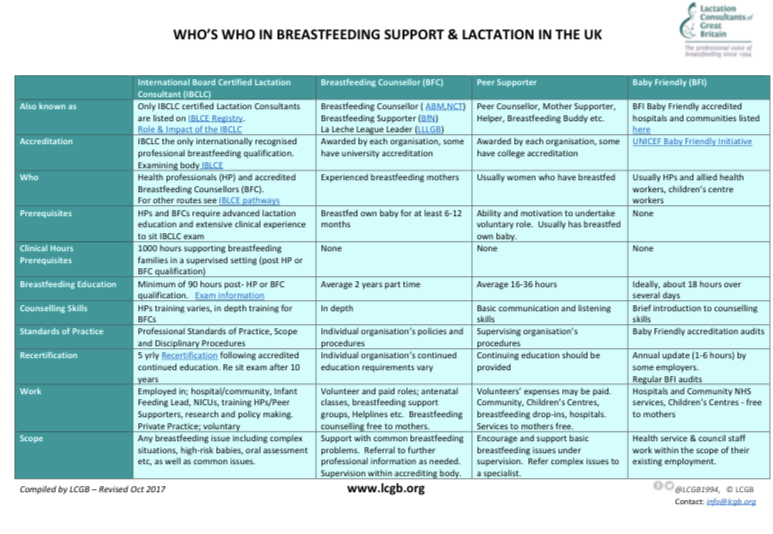
The different roles of breastfeeding support in the UK have been outlined in the chart below:

Who’s Who in Breastfeeding Support and Lactation in the UK, from Lactation Consultants of Great Britain

WBTi’s research: Case studies of best practice
The WBTi 2016 Report featured several case studies of areas who showed best practice in providing well joined up, integrated breastfeeding services: Brighton and Harrow.

Case studies of two breastfeeding services providing integrated support, 2016.
In Part 2 of our WBTi UK Report

More recently, our WBTi team has presented posters featuring these and additional case studies of best practices in providing integrated breastfeeding services: Medway, Harrow and Swindon.

WBTi Poster on Integrated Breastfeeding Services.

These examples of best practice in integrated breastfeeding services gave concrete results.

They demonstrated:

– a 2% rise in breastfeeding rates in a socially deprived area in 2018 (Medway),

– a 15% rise in initiation and a 12% rise in continuation of breastfeeding over a six year period (Harrow)

– and a 6% reduction in drop off rates from birth to 6-8 weeks over six years (Swindon).

Our WBTi team are always on the lookout for further examples of best practice in integrated breastfeeding services, and we submit them to Public Health England. Please do contact us if you would like to submit your local services!

Email us at wbti@ukbreastfeeding.org

Sign up to our mailing list HERE

Banner photo credit: Pixabay

Helen Gray MPhil IBCLC is Joint Coordinator of the World Breastfeeding Trends (WBTi) UK Working Group. She is also an accredited Leader (breastfeeding counsellor) with La Leche League of Great Britain.

#WBW2021 Protect Breastfeeding: a Shared Responsibility – Health Professionals

#WBW2021  Protect Breastfeeding: a Shared Responsibility – Health Professionals

This is the start of World Breastfeeding Week, which runs from the 1st to the 7th August each year. Our focus this year for Day 1 is Health Professionals.

“It takes a village to raise a child; it takes a community to support mothers to breastfeed

Sue Ashmore, Unicef UK Baby Friendly Initiative

Sue Ashmore of the Unicef UK Baby Friendly Initiative (BFI) wrote in 2017 ‘Just as the saying goes: ‘It takes a village to raise a child’, it takes a community to support mothers to breastfeed.’ (blog for the Huffington Post). That community includes health professionals but also breastfeeding specialists, such as IBCLCs and breastfeeding counsellors, and trained peer supporters.

Health professionals who have contact with mothers and their babies are a crucial part of that village of support. Since the WBTi report was pubished in 2016, an improvement has been the requirement of the NHS England Long-Term Plan (p.49) that all maternity units work towards achieving Baby Friendly accreditation. In comparison, all Scotland and N.I. maternity units were already accredited by 2016. Meeting this requirement will help provide a good basic standard of infant feeding support in English maternity units but as yet there is no requirement for neonatal units or community services (primarily that means the health visiting service) to achieve Baby Friendly status.

Summary table mapping UK health professional standards against WHO Educational Checklist on Infant and Young Child Feeding. See our report part 1 (for the table) and Part 2 (for details of individual health professions) https://ukbreastfeeding.org/wbtiuk2016/

The 2016 WBTi report highlighted the need for better training for most health professionals who work with new mothers. Since then, we’re very pleased to report that many more resources have been made available, including:

  • The GP Infant Feeding Network (GPIFN) and Hospital Infant Feeding Network (HIFN) were created and both have highly informative websites.
  • There have been some improvements to the paediatric and GP education curricula.
  • BFI has produced learning outcomes for students of several professions – medical, dietetic, pharmacy and maternity support workers/nursery nurses.
  • The University of Glasgow, working with BFI, has developed an e-learning module for first year medical students to support meeting the learning outcomes.
  • The Royal College of Paediatrics and Child Health has regularly updated its position statement on breastfeeding, the latest being June 2021, and includes: ‘RCPCH strongly supports breastfeeding, the promotion of breastfeeding, the provision of advice and support for women, and national policies, practices and legislation that are conducive to breastfeeding. All child health professionals should be trained to deliver simple breastfeeding advice.’
  • The Royal College of General Practitioners launched its position statement on breastfeeding in 2017 and then a free e-learning course on breastfeeding in 2018.
  • An e-book for trainee doctors that I wrote, available on our website.
Free e-book on breastfeeding for doctors, by Patricia Wise
https://ukbreastfeeding.org/supporting-mothers-who-breastfeed-a-guide-for-trainee-and-qualified-doctors/

Thus some progress has been made towards the vision of all mothers who want to breastfeed being able to access seamless support from health professionals, additional breastfeeding specialists and trained peer supporters, all of whom value breastfeeding and are knowledgeable enough either to provide evidence-based information and support themselves or signpost to appropriate support.

Subscribe to our mailing list HERE

Patricia Wise is an NCT Breastfeeding Counsellor and a member of the WBTi UK Steering Group

What support is needed?

What support is needed?

This may be the end of World Breastfeeding Week 2020 but campaigning for good breastfeeding support to be readily available to all mothers with young babies and for society to value breastfeeding, in order to maximise the population’s health and help protect the environment, continues.

This year Covid-19 lockdown has been an added complication for families, with minimal face-to-face contacts, and we do not know how long restrictions will need to continue. This is your opportunity to let us know what support you think is needed in the months ahead by using the Leave a Reply button below. Reading S’s story may help you identify what’s needed.

S gave birth to her first baby R in January and movingly describes her experiences and how she found the feeding arrangement that worked best in her circumstances:

“So R turned 6 months old last weekend and he is really thriving! I am still breastfeeding him which I am so proud I continued with, and it definitely got easier as time went on. It has always been a combined method with the bottle but his milk intake of breast has always been at least 60-75%. My milk supply never caught up after the mastitis no matter how much expressing and breastfeeding I did, and I found it was also really hard to try and sustain that vigorous cycle with my ME – I started to have really bad days where I just couldn’t function so it was easier for my husband to feed R with expressed milk and top up with formula if necessary. I do feel that the routine we got into with breastfeeding, expressing and bottles was the best we could do in our particular situation and he’s such a healthy little boy. I’m really glad I persevered with it all.

We started baby-led weaning about a fortnight ago and R is loving interacting with all the different foods! He especially loves broccoli (he was so keen on it, that not only was he feeding himself the various stalks I’d put on his tray, but he was trying to lick the tray too to get all the broccoli off!!), avocado, sweet potato, carrot, pear and banana. He wasn’t so keen on mashed potato – he preferred to wear it instead!

Life has been really strange and difficult in lockdown if I’m honest. It’s felt quite lonely, as I’m sure it has for everyone else, but we’ve really struggled at times to keep going without familial or friend support. The extra perinatal support I was having became video calls which I’m really grateful for but isn’t the same as in person. Aside from the difficulties, he’s such a lovely happy boy – I’m so proud!”

Thank you, S, for sharing your story.

Patricia Wise

Image from Adobe Stock

Breastfeeding During the Covid-19 Pandemic

As part of World Breastfeeding Week, #WBW2020 and #GreenFeeding, we’re emphasising the importance of mothers having easy access to good quality breastfeeding support, if and when they need it. This is partly provided by skilled people and partly by evidence-based written information. 

This short leaflet for new parents gives tips about breastfeeding during the pandemic and also lists reliable sources of information and support. The aim is to help empower families who may be much more isolated than families generally were before the Covid-19 pandemic and have limited access to face to face help from health professionals and local breastfeeding support groups.  

A slightly shortened two-page landscape version of the leaflet can be downloaded from here.

How do I manage as a new mother breastfeeding during the Covid-19 pandemic? 

How can I best protect my baby? 

Breastfeeding is one of the most important ways you can protect your baby. Your body makes antibodies in your milk which help your baby fight infections. Breastfeeding also helps babies develop a good long term immune system, and also help to protect mothers from breast cancer, heart disease, obesity and diabetes. 

No evidence has been found that coronavirus is passed through breastmilk. Mothers make specific antibodies to any infections they are exposed to, and these pass into their milk. This means that a mother with Covid-19 can help protect her baby against all kinds of pathogens by breastfeeding, and may even provide specific antibodies to the novel coronavirus. 

Covid-19 precautions 

However a baby is fed, they could be exposed to Covid-19 if their carer coughs or sneezes over them so the parent/carer might prefer to wear a face covering when in close contact and needs to wash their hands regularly. RCOG (the Royal College of Obstetricians and Gynaecologists) provides more details under Advice for women with suspected or confirmed coronavirus infection who have recently given birth.

Fewer visits to GP or hospital 

Exclusive breastfeeding for 6 months, then continuing to breastfeed alongside other foods, helps babies to be as healthy as possible and lowers their chance of needing to see a GP or have a hospital stay, e.g. for ear or chest infections. 

Food security 

Breastfeeding means parents do not have to worry about formula supplies or even shop for formula. 

How do I know my baby is getting enough? 

Babies are normally weighed at birth, 5 days & 10-14 days (when the health visitor usually takes over from the midwife).  With the pandemic, there may be few opportunities to have your baby weighed or see your midwife or health visitor face-to-face.  

However, your baby’s behaviour and nappy contents can help you know if your baby is getting enough milk.  

The first 6 days are a time of change.  From mid-pregnancy breasts produce a thick, usually yellow, type of milk called colostrum. A few days after birth, colostrum transition to more mature milk. The breasts usually feel very full at this time. The poos change too: 

  • thick black meconium for the first couple of days after birth 
  • green around Day 3 to 4  
  • At least two yellow poos each day, by Day 5 to 6  

A baby who is getting enough shows this pattern, takes themselves off the breast and generally settles after feeds. For photos of nappy contents see this NCT information

From 6 days to around 6 weeks, milk intake is probably fine if: 

  • your baby is usually contented after feeds 
  • has at least 6 heavy wet nappies/ day 
  • has 2 poos each at least the size of a £2 coin per day 

After 6 weeks, some babies poo less often but the overall amount is about the same. 

In the first two weeks, if your baby hasn’t pooed for 24 hours, contact your midwife and a breastfeeding helpline or local supporter for help.  

How do I know breastfeeding is going well? 

It’s going well if your baby is getting enough and you are finding breastfeeding comfortable. 

Start4Life provides very useful information about how breastfeeding helps the health of babies and mothers and how to help your baby latch on well. 

However, if your baby often falls asleep during feeds and wakes up again hungry after a few minutes, feeds are regularly longer than an hour, or it is uncomfortable or painful for you, the most likely reason is that your baby isn’t latched well enough to feed effectively. 

How can I increase my milk supply? 

If your baby is producing less wee and poo than expected, or you are topping up with formula,  

  • can you breastfeed more often – another feed or two in 24 hours? 
  • are you offering both breasts at every feed? you could switch back and forth during a feed 
  • breast compression can increase milk flow 
  • can you contact a helpline or breastfeeding supporter for more suggestions?

Remember – if you feel your baby is feeding very often, they are trying to get enough milk, and also helping to increase your milk supply. 

And if breastfeeding isn’t going well? 

To latch well the baby needs to gape wide, have the nipple in the upper part of their mouth, and chin pressed against the breast. Snuggle your baby close, head free, nose level with your nipple. This detailed information from La Leche League shows different positions you could try, and ways of helping your baby latch better.

If feeding is painful, or you are breastfeeding very frequently but your baby isn’t getting enough milk, get skilled help! You can also express your milk and offer your baby expressed milk until your baby starts feeding better and your nipples have healed. The Breastfeeding Network has information about expressing and storing breastmilk.  Your midwife or health visitor can help you learn to use a cup or bottle safely. 

Where can I get skilled help? 

You can contact the local midwifery team or health visiting service using the phone numbers you’ve been given. Often there is an Infant Feeding Coordinator or team who can provide more specialised support. They may also put you in contact with a volunteer breastfeeding counsellor or peer supporter. There are several charities continuing to offer free skilled breastfeeding support (see below). Your GP is the appropriate contact for medical situations – such as mastitis that isn’t improving after 24-48 hours – alongside breastfeeding support. 

Partners and family support 

Her partner can be a huge support to a mother who is breastfeeding and one possible silver lining of the pandemic is that many are at home and able to give more support.

UK breastfeeding helplines  

National Breastfeeding Helpline 9.30am – 9.30 pm 0300 100 021 
La Leche League GB (LLLGB) (web chat and email also available) 0345 120 2918 
La Leche League Northern Ireland 028 95 818118 
NCT Helpline 8am – 12 midnight 0300 330 0700 
Breastfeeding Helpline for Bengali/Sylheti speakers 0300 456 2421 
Breastfeeding Helpline for Tamil/Telugu/Hindi speakers 0300 330 5469 
Drugs in Breastmilk Information – Breastfeeding Network (BfN) https://www.breastfeedingnetwork.org.uk/detailed-information/drugs-in-breastmilk/ 
Email: drug-information@breastfeedingnetwork.org.uk 

Virtual Support by Video 

LLLGB has daily free local online support groups   https://www.laleche.org.uk/find-lll-support-group/ 
NCT  – details of free local Zoom support groups available via the helpline: 0300 330 0700 
IBCLCs (International Board-Certified Lactation Consultants) – these may work for the NHS, voluntarily or provide a paid-for service.  To find an IBCLC see the LCGB website.  https://www.lcgb.org/find-an-ibclc/ 

Reliable sources of information 

World Health Organisation

 LLL

BfN

NCT

ABM

The Baby Buddy app from Best Beginnings provides more personalised information. https://www.nhs.uk/apps-library/baby-buddy/ 

Specific concerns 

Further information and self-help suggestions for common concerns listed below are described on several websites, such as the Institute of Health Visiting Parent tips, NCT’s information on breasts after birth and the NHS website.  

My breasts are hard and painful 

In the early days, this could be engorgement. Frequent feeding helps. La Leche League provides detailed information.  

I have a small tender area in one (or both) breasts 

This could be a blocked duct. Gentle massage over the area while feeding often helps.    

I feel fluey and have a hot, hard, red area on my breast 

This is likely to be mastitis. Removing milk, by feeding baby or by expressing, is the most helpful action, along with other self-help measures described here. La Leche League provides detailed information. 

I think my baby has tongue-tie 

A tongue-tie only needs to be divided if it is significantly affecting feeding. If breastfeeding is affected, the first step is to check the baby is as well-latched as possible. For families who may have to wait for treatment during COVID19, this is a very useful and detailed article by Sarah Oakley, IBCLC. 

My baby takes a lot when I bottle feed 

“I’m giving some top-ups for the moment because my baby lost too much weight but he takes a lot quickly and then is uncomfortable with wind.” Having the bottle level rather than tilted and giving the baby pauses helps the baby cope with the flow from a bottle and it can be easier to tell when the baby has had just enough. This is called ‘responsive bottle feeding‘.  

My mother-in-law keeps wanting to give my baby formula 

ABM (the Association of Breastfeeding Mothers) has a leaflet for grandparents to help them understand what is now known about breastfeeding.  

I stopped breastfeeding but now I want to restart 

This can be done but needs commitment as it takes a while to build up the milk supply again. You may find it easier if you have someone providing you with ongoing skilled support with relactation.  

Our message to you 

We hope the above information, and support options if you need them, can help towards you enjoying breastfeeding and continuing for as long as you and your baby want to.    

Authors: The WBTi UK Steering Group – Helen Gray, Clare Meynell, Alison Spiro, Patricia Wise; design by Carol Smyth

Seeing the world through babies’ eyes

Seeing the world through babies’ eyes

This week (7- 12 June) is Infant Mental Health Awareness Week and the theme is ‘20:20 vision: Seeing the world through babies’ eyes’. The Week is led by the Parent-Infant Foundation (PIF) and the First 1001 Days Movement, a collaboration of relevant organisations with the PIF as secretariat, which is being launched during the week.

What is infant mental health? It is the emotional wellbeing of babies. The Movement’s vision is that ‘every baby has loving and nurturing relationships in a society that values emotional wellbeing and development in the first 1001 days, from pregnancy, as the critical foundation for a healthy and fulfilling life.’

What babies want is what they need and these needs are basic. As obstetrician Grantly Dick-Read  wrote in the mid 20th century:  

“The newborn has only three demands. They are warmth in the arms of its mother, food from her breasts, and security in the knowledge of her presence. Breastfeeding satisfies all three.”

They do also need to receive attention from other humans. If their needs are usually met, babies can form secure relationships (attachment) with their caregivers. Usually, there is one primary caregiver, most commonly the mother. Attachment theory was developed by the psychoanalyst John Bowlby in the 1950s. An attachment figure who cares responsively for the infant provides a secure base. It is believed that behaviours by the infant to stay close when separated, like screaming and clinging, have been reinforced by natural selection (see What is attachment theory).

Babies are vulnerable – as Donald Winnicott, paediatrician and psychoanalyst, among his other insightful quotes, stated:

‘There is no such thing as a baby, there is a baby and someone’.

However, infants are not passive as they communicate by giving cues to their needs, such as the rooting reflex when hungry. If their needs are not responded to quickly, they become upset. Dr. Edward Tronick’s ‘still face’ experiments in the 1970s showed the importance of human connection for an infant. If the parent’s face is still and unresponsive to her baby, the baby looks confused and then becomes distressed. The experiments also showed that ruptures in a relationship like this are easily repaired. Parents do not need to respond perfectly.

However, when there is repeatedly no response to a baby’s distress, as in sleep training where the baby is left alone and expected to adapt, it was found that the babies’ behaviour changed so that by the third night they were no longer crying but their cortisol (stress hormone) levels were still high so there was a mismatch between behaviour and physiology; instead of learning to self-soothe it seems as though they were giving up so in despair. 

The significance of the care babies receive is that their experiences, starting before birth, influence the neural connections that are formed in the developing brain – the ‘wiring’. A parent who is emotionally not really available to the baby (so not attuned to their needs) will find it difficult either to respond or to respond appropriately, providing an unintentional ‘still face’ or angry face. The parents could be ill, depressed, addicted, suffering domestic abuse, desperately worried about their financial situation, overloaded with responsibilities………It is therefore crucial for a society to care for parents so that they can be emotionally available to their children.

Feeding is a crucial part of nurturing care and breastfeeding facilitates the process.There is considerable evidence that not being breastfed is linked to poorer physical health in infants (Lancet, 2016). Breastfeeding provides personalised nutrition. Antibodies and other components in breastmilk reduce the chance and severity of infections. Oligosaccharides in breastmilk feed and thus favour beneficial bacteria in the infant’s gut and this helps the development of a healthy immune system. It is difficult to allow for confounding factors in studies on breastfeeding but reviews show it is linked with better cognitive performance, which is likely to be due to the fatty acids in breastmilk. But what about any impact on emotional development? There are studies which suggest that being breastfed is associated with paying more attention to positive emotions in others.  Breastmilk contains the calming hormone oxytocin, which stimulates social interactions, and which is further released through touch and suckling, so the moods of both mother and baby benefit. Several studies indicate that mothers who are breastfeeding tend to touch their babies more, are more responsive and tend to gaze at them more, all of which will help the infant’s emotional wellbeing. The Unicef UK Baby Friendly Initiative leaflet, Building a Happy Baby, provides practical suggestions for parents to support their baby’s brain development and addresses myths and realities. 

Jones found that breastfeeding helps to protect infants from the harmful effects of maternal depression

Mothers who stop breastfeeding before they want to are at greater risk of postnatal depression (Borra et al 2014) so mothers need easy access to breastfeeding support to help them continue, thereby benefitting their babies physically and emotionally. Sadly, there are barriers to breastfeeding throughout society, as outlined in the WBTi UK report.

Parents and carers urgently need more support, especially during the stresses and isolation of lockdown and the COVID19 pandemic. We call on government to make infants and their families a high priority during the pandemic and in our plans to rebuild a stronger society.

Photo used with permission

Patricia Wise is an NCT breastfeeding Counsellor and a member of the WBTi UK Steering Group

Shocking gaps in emergency preparedness for Europe’s babies

Shocking gaps in emergency preparedness for Europe’s babies

The Covid-19 pandemic has shown how important it is for countries to protect their citizens from illness.

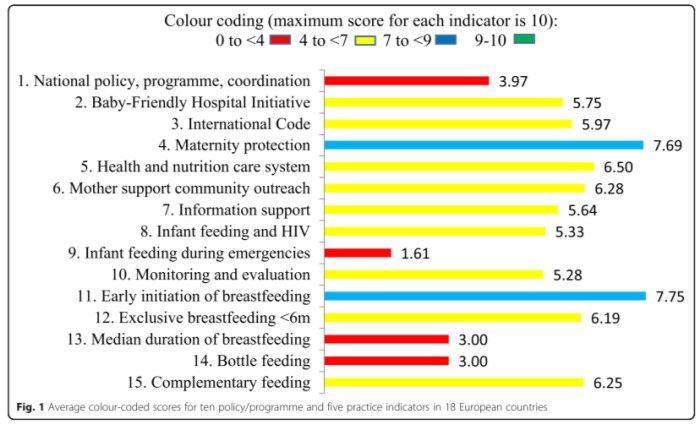
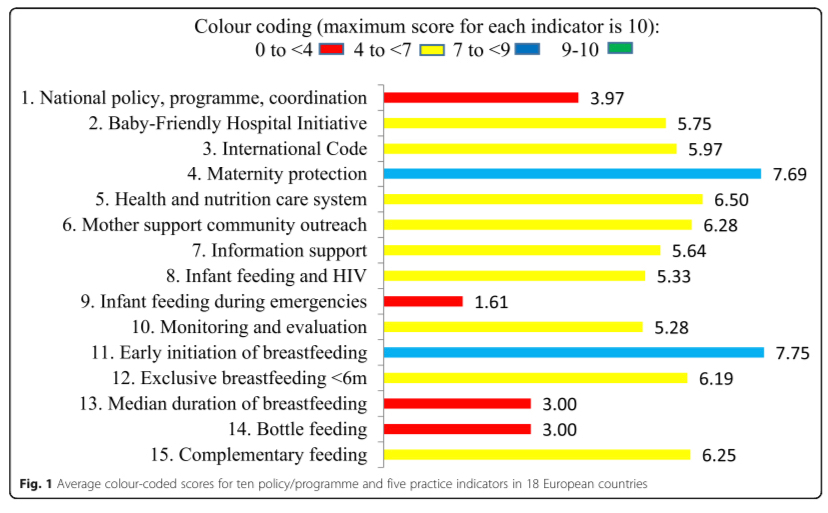
Yet a new WBTi regional report shows gaps in support for families across Europe, with the poorest overall scores in national leadership and, shockingly, emergency preparedness, where the UK scored 0/10. This pandemic is an emergency for infants and young children and only North Macedonia was found to have an adequate strategy.

Babies who are breastfed have better health and resistance to infection, and most mothers want to breastfeed. Yet many European mothers stop or reduce breastfeeding in the early weeks and months, and bottle feeding is prevalent, due to inadequate support from health systems and society.

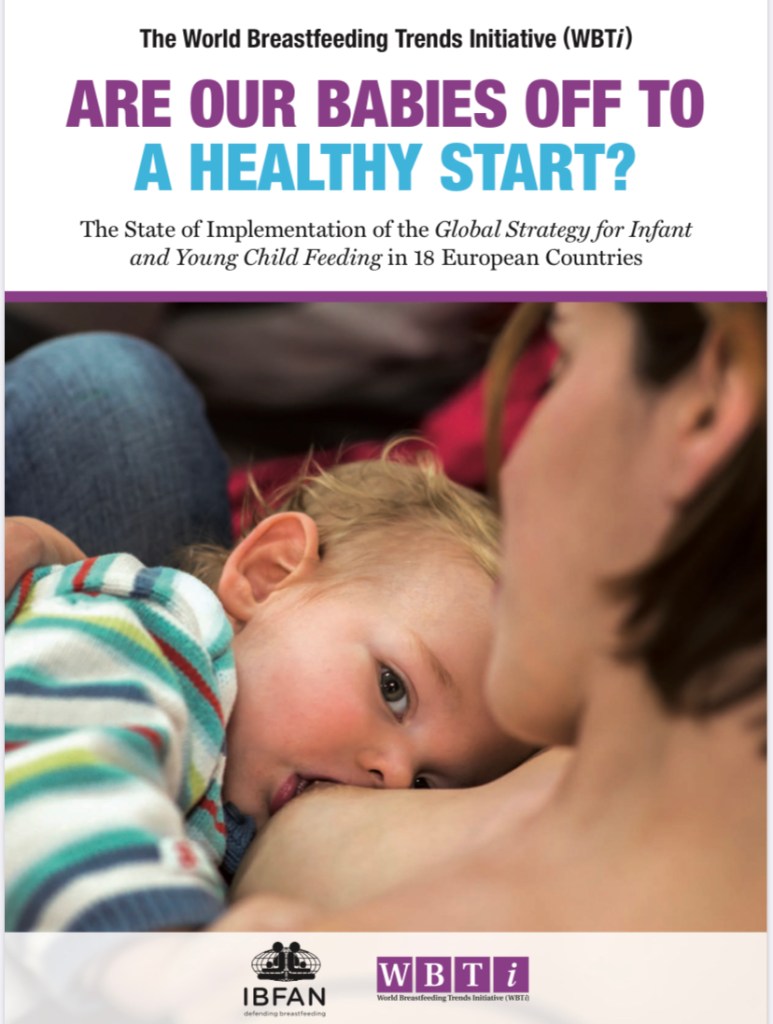
Launched today, the first European report on infant and young child feeding policies and practices, Are our babies off to a healthy start?, compares 18 countries and identifies the considerable improvements they need to make in supporting mothers who want to breastfeed. A summary report has been published today in the International Breastfeeding Journal .

The full report can be downloaded from the World Breastfeeding Trends Initiative global website.    

The new report, Are our babies off to a healthy start?, compares the  implementation of WHO’s Global Strategy for Infant and Young Child Feeding across 18 European countries. The comparisons show clearly that inadequate support and protection for breastfeeding mothers is a Europe-wide problem. The health of babies, mothers and whole populations  lose out as a result. However, countries do differ considerably. Turkey rates highest overall; the five countries with the lowest scores belong to the European Union. 

     ‘Nutrition is key to achieving the Sustainable Development Goals related to health, education, sustainable development, reduction of inequalities and more.’

Joao Breda, Head, WHO European Office for Prevention and Control of Noncommunicable Diseases

The scope of the assessment is wide-ranging, with ten policy and programme indicators, including national leadership, Baby Friendly hospital and community practices, marketing controls on breastmilk substitutes, health professional training, emergency preparedness and monitoring. There are also five feeding practices indicators, such as exclusive breastfeeding for 6 months, a WHO recommendation. 

The original assessments were all carried out using the World Breastfeeding Trends Initiative (WBTi), a tool first developed in 2004 by the International Baby Food Action Network (IBFAN) but only launched in Europe in 2015. It requires collaboration with relevant organisations within a country on assessment scores, gaps identified and recommendations for improvements. The Report highlights good practice, enabling countries to learn from one another.

     ˝Success …rests first and foremost on achieving political commitment at the highest level and assembling the indispensable human and financial resources.’

WHO Global Strategy 2003

If governments, other policymakers, hospitals and community services, public health departments, institutions that train health professionals, and others, adopt the report recommendations, it will enable more mothers to initiate and continue breastfeeding, strengthening the health of the population for the future.

The WBTi European Working Group, led by Dr. Irena Zakarija-Grkovic of Croatia, produced the Report and comprises coordinators from European countries which have carried out a WBTi assessment. The production of the report was supported by the Croatian Ministry of Health and UNICEF Croatia.

Sign up to our WBTi UK mailing list

UK media contact: wbti@ukbreastfeeding.org

Lockdown with a baby?

Lockdown with a baby?

Maternal Mental Health Day is on the first Wednesday in May, which this year was 6th May.  A group of organisations has launched a new survey to try to capture parents’ experiences in the context of a global pandemic and social distancing. If the survey can be distributed widely to parents with a baby/child under 2 year, or are pregnant, to gather the views of parents of a range of ages, ethnicities and experiences, the data will be particularly useful.

Click HERE for survey link.

The collaborating organisations include members of the First 1001 Days Movement, which is coordinated by the Parent-Infant Foundation, Home-Start UK, Best Beginnings, and the Maternal Mental Health Alliance. The WBTi UK Steering Group have also signed up to support the First 1001 Days Movement.

Do you know anyone who is pregnant or has a child under 2 years who might be interested in completing the survey? Please pass on the survey link. The survey is expected to be open for about 3 weeks, so until late May.

Headline results of the survey are due to be released in Infant Mental Health Awareness Week (7-12 June).

Photo courtesy of Paul Carter, We Do It In Public (wdiip.co.uk)

Patricia Wise is an NCT Breastfeeding Counsellor and a member of the WBTi UK Steering Group.