WBTi UK Steering Group members, Helen, Clare, Alison and Patricia, were very pleased to be invited to give a presentation on the 2024 Report to the All-Party Parliamentary Group (APPG) on Infant Feeding on 18 June, 2025. This APPG, an informal cross-party group, is hosted by Liberal Democrat MP for Chichester, Jess Brown-Fuller, who is a staunch advocate for breastfeeding. Meetings are quarterly.
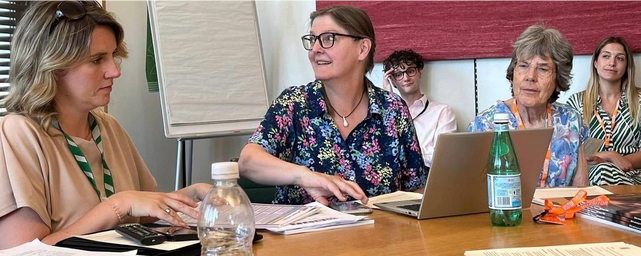
(left to right) Jess Brown-Fuller MP, Helen and Patricia during the presentation
The hybrid event was held in Portcullis House, which is close to the Houses of Parliament and overlooks the River Thames.
At the meeting, Helen and Patricia gave an overview of the Report’s findings. This triggered a range of questions from the audience in the room and online. Attendees included Labour MP for Ribble Valley, Maya Ellis, and Liberal Democrat MP for mid-Sussex, Alison Bennett, along with representatives of Royal Colleges and local public health teams, as well as the breastfeeding support organisations.
(left to right) Jayne Joyce and Emily Lunny (LLLGB), Helen Gray and Patricia Wise (WBTi Steering Group) and Katie Pereira-Kotze (First Steps Nutrition Trust)
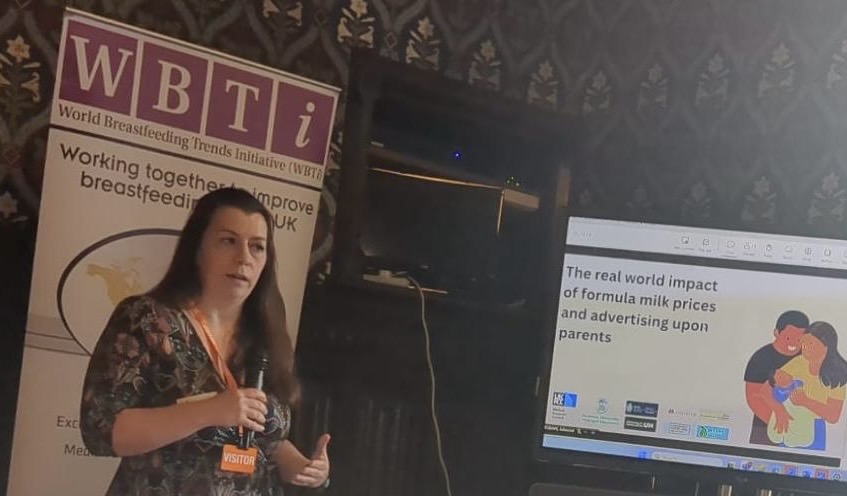
Presentation title slide
APPG meetings
If you would like to be notified about future Infant Feeding APPG meetings, please contact Edmund Legrave, Parliamentary Assistant for Jess Fuller-Brown: edmund.legrave@parliament.uk
Jess Brown-Fuller, MP for Chichester, hosted the formal launch of the WBTi 2024 UK report on July 24th 2025 in the Jubilee Room at the Houses of Parliament.
(left to right) Patricia Wise, Clare Meynell, Jess Brown-Fuller MP with visiting baby Niamh, Helen Gray, Alison Spiro
Kate Quilton
Investigative journalist Kate Quilton drew on her own experiences in emphasising the importance of a policy framework, and chaired the Q&A.
What do policymakers need to do, to protect and support breastfeeding?
The WBTi 2024 report made a number of key policy recommendations on maternity rights, marketing regulations and food safety.
WBTi’s ‘big ask’
The aim of the WBTi project is to galvanise action to implement report recommendations, thus improving support and protection for infant feeding. Our single most immediate actionable ask is for the UK and devolved governments to adopt the eleven recommendations of the Competition and Markets Authority (CMA) report on regulating misleading infant formula promotion. Adopting these would help to end the profiteering we have seen in recent years (formula prices have gone up by 24%! including one by 49%!). This would also help families make informed infant feeding decisions and for them to be able to access affordable products to feed their babies if needed.
The CMA recommendations encompass many of the WBTi UK recommendations on protecting families from exploitative marketing. In addition, WBTi calls for the regulations to apply to ALL formulas from 0-36 months. This would help end the loopholes that companies use in the marketing of formulas for older babies and toddlers, or for special medical purposes.
Professor Nigel Rollins
Professor Nigel Rollins, who formerly worked for the World Health Organisation and is now at Queens University, Belfast, gave a policy overview and more details about our ‘Call to Action’.
Parents are struggling
Professor Amy Brown of Swansea university stunned the room when she revealed some of the shocking findings of her research into the challenges families are facing to afford the high prices of formula.
Professor Amy Brown
Her presentation called for:
Lower priced milks – consistent, reliable and affordable pricing
Accurate information, not adverts
Parents should be supported to feed their baby without worrying about cost
For the health and well-being of parents and babies to be put before profits
She shared powerful testimony about the impact of the high cost of formula from parents themselves:
Breastfeeding is important
“Breastfeeding is a human right for both mother and child” (UN human rights joint statement 2016).
WBTi work is built on a foundation of human rights. UN human rights experts have made it clear that breastfeeding is a right of the dyad, the mother and infant together. The rights of one don’t supercede the other; mother and baby have rights as a dyad. It is the responsibility of our governments to support and protect those rights, by providing skilled health care, maternity protection at work, and protecting the rights of women and families to make their own informed decisions about how to feed their baby, without commercial influence.
What is the impact of low breastfeeding rates in the UK?
High costs for the NHS:
Low UK breastfeeding rates are costing the NHS £millions:
54,000 more GP appointments
9,500+ additional hospitalisations
Research has shown that basic interventions to support more mothers to breastfeed for longer could pay for themselves within a year. (Renfrew et al 2012)
Costing our planet:
The formula and dairy industries have a significant footprint both of greenhouse gases and water.
“For the UK alone, carbon emission savings gained by supporting mothers to breastfeeding would equate to taking between 50,000 and 77,500 cars off the road each year” (Joffe et al 2019)
Key recommendations from the WBTi Core Group
Our governments must address the ‘baby blind spots’ in national policies:
Protect all infants by adopting in full the recommendations of the CMA, and extending the regulations to cover all infant milks up to 3 years, in order to address current loopholes in marketing formulas for older infants or for special medical purposes.
WBTi recommends that regulations on safety and on marketing should be applied to feeding equipment such as bottles, teats, and other equipment, as well.
Protect infants and young children in emergencies by developing guidance on their care.
Protect the health and the rights of women and children by providing statutory rights for flexible breastfeeding/ expressing breaks and suitable facilities in the workplace and in education.
Develop a national infant feeding strategy and leadership for England.
Improve monitoring and evaluation by strengthening and coordinating data collection systems.
Helen is a member of the Steering Group for the World Breastfeeding Trends Initiative (WBTi) project in the UK.
An IBCLC and La Leche League Leader (breastfeeding counsellor), she has served as both Communications Co-Chair and Policy and Advocacy Lead for Lactation Consultants of Great Britain. She represents La Leche League of Great Britain on the UK Baby Feeding Law Group (BFLG), which works to bring the International Code of Marketing of Breastmilk Substitutes into UK law.
Helen’s background in anthropology and human evolution has influenced her interest in how breastfeeding and the way we nurture our babies are influenced by both human biology and culture.
She is currently doing a research degree on the need for strong policies to protect infant feeding in emergencies. She has written several articles and chapters on the subject and served on the Advisory Panel for a London Food Resilience research project. She now represents BFLG on the global Infant Feeding in Emergencies Core Group.
This is the start of World Breastfeeding Week, which runs from the 1st to the 7th August each year. Our focus this year for Day 1 is Health Professionals.
“It takes a village to raise a child; it takes a community to support mothers to breastfeed
Sue Ashmore, Unicef UK Baby Friendly Initiative
Sue Ashmore of the Unicef UK Baby Friendly Initiative (BFI) wrote in 2017 ‘Just as the saying goes: ‘It takes a village to raise a child’, it takes a community to support mothers to breastfeed.’ (blog for the Huffington Post). That community includes health professionals but also breastfeeding specialists, such as IBCLCs and breastfeeding counsellors, and trained peer supporters.
Health professionals who have contact with mothers and their babies are a crucial part of that village of support. Since the WBTi report was pubished in 2016, an improvement has been the requirement of the NHS England Long-Term Plan (p.49) that all maternity units work towards achieving Baby Friendly accreditation. In comparison, all Scotland and N.I. maternity units were already accredited by 2016. Meeting this requirement will help provide a good basic standard of infant feeding support in English maternity units but as yet there is no requirement for neonatal units or community services (primarily that means the health visiting service) to achieve Baby Friendly status.
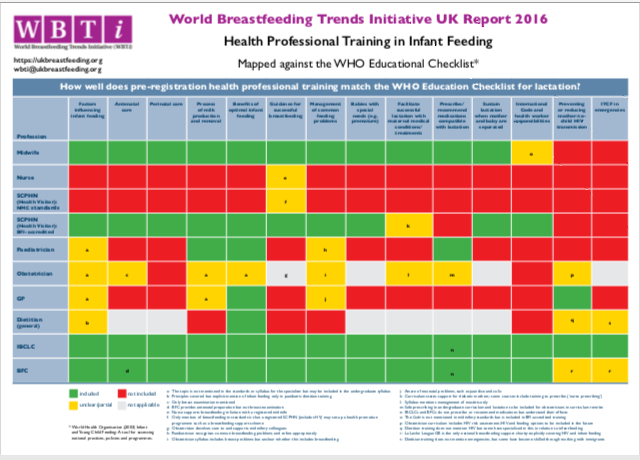
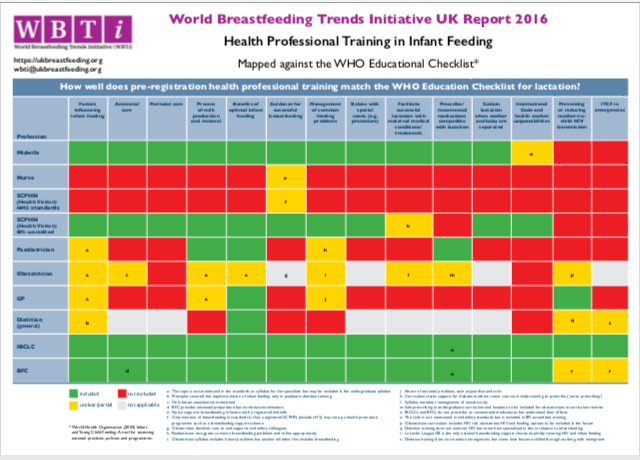
Summary table mapping UK health professional standards against WHO Educational Checklist on Infant and Young Child Feeding. See our report part 1 (for the table) and Part 2 (for details of individual health professions) https://ukbreastfeeding.org/wbtiuk2016/
The 2016 WBTi report highlighted the need for better training for most health professionals who work with new mothers. Since then, we’re very pleased to report that many more resources have been made available, including:
The GP Infant Feeding Network (GPIFN) and Hospital Infant Feeding Network (HIFN) were created and both have highly informative websites.
There have been some improvements to the paediatric and GP education curricula.
BFI has produced learning outcomes for students of several professions – medical, dietetic, pharmacy and maternity support workers/nursery nurses.
The University of Glasgow, working with BFI, has developed an e-learning module for first year medical students to support meeting the learning outcomes.
The Royal College of Paediatrics and Child Health has regularly updated its position statement on breastfeeding, the latest being June 2021, and includes: ‘RCPCH strongly supports breastfeeding, the promotion of breastfeeding, the provision of advice and support for women, and national policies, practices and legislation that are conducive to breastfeeding. All child health professionals should be trained to deliver simple breastfeeding advice.’
The Royal College of General Practitioners launched its position statement on breastfeeding in 2017 and then a free e-learning course on breastfeeding in 2018.
Thus some progress has been made towards the vision of all mothers who want to breastfeed being able to access seamless support from health professionals, additional breastfeeding specialists and trained peer supporters, all of whom value breastfeeding and are knowledgeable enough either to provide evidence-based information and support themselves or signpost to appropriate support.
A new study by trainee doctor Kirsty Biggs and senior colleagues has shown that 97% of the 411 medical students who responded to a survey are uncertain of their practical skills to support new mothers with breastfeeding, such as helping with latch issues, although the overall benefits of breastfeeding were moderately well-known. Yet most students (93%) perceived doctors to have an important role in supporting breastfeeding and the same percentage requested further breastfeeding education.
Over 80% of the respondents had a career interest in obstetric and gynaecology, paediatrics and/or general. While the sample was only around 1% of UK medical students, and only one-quarter of the students responding were male, it’s a very clear message that breastfeeding education overall is not adequate.
Around 80% of the 32 UK medical schools eligible responded to their part of the survey and results indicate that only 70% of medical schools provide compulsory breastfeeding education.
WBTI’s findings and vision
The WBTi UK report in 2016 indicated that medical curricula have many gaps with regard to breastfeeding, and Biggs’ study confirms that the students themselves find it inadequate. WBTi UK’s vision is that all doctors have sufficient training in infant feeding to protect the decisions of mothers who want to breastfeed.
How can the situation be improved? High level standards and Unicef BFI learning outcomes
The General Medical Council provides broad guidelines for undergraduate curricula in its Outcomes for Graduates document and each medical school devises its own curriculum to fit the guidelines. For example, the expectation under the Outcomes Health promotion and illness prevention section is: ‘Newly qualified doctors must be able to apply the principles, methods and knowledge of population health and the improvement of health and sustainable healthcare to medical practice’. Unicef UK Baby Friendly Initiative’s learning outcomes for several professions, including medical students, published in November 2019 are highly relevant to improving curricula and accompanying resources are being developed.
RCPCH curriculum – an encouraging sign
Medical training is long, with undergraduate, Foundation and then specialty training. The RCPCH (Royal College of Paediatrics and Child Health) states as part of its activity to promote breastfeeding: ‘The RCPCH training curriculum for General Paediatricians and all paediatric subspecialties requires training to understand the importance of breastfeeding and lactation physiology, be able to recognise common breastfeeding problems, have knowledge of formula and complementary feeding, and be able to advise mothers or refer for support.’
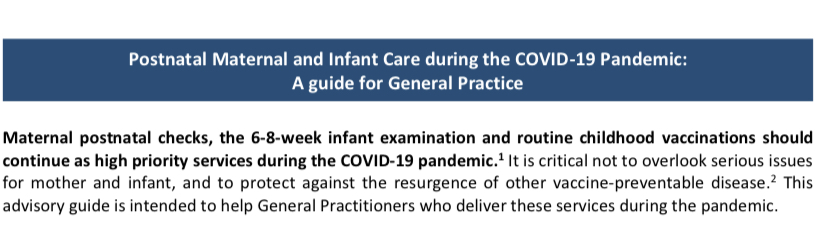
Mentioning infant feeding in guidance to doctors to encourage including it in consultations is also important. GP Louise Santhanam (founder of GPIFN) is the lead author of Postnatal Maternal and Infant careduring the COVID-19 Pandemic: a Guide for General Practicethat was recently added to the RCGP website. This clarifies that 6-8 week checks need to continue despite the Covid-19 pandemic and that infant feeding should be a routine clinical consideration.
Thus plenty of resources are available but doctors are busy people. While some really understand the importance of protecting breastfeeding, and know how to – such as signposting mothers to local skilled help – the challenge is how to bring this into every medical student’s training.
If you know anyone at medical school, it would be really useful if you can let them know about Kirsty Biggs’ study.
The Covid-19 pandemic has shown how important it is for countries to protect their citizens from illness.
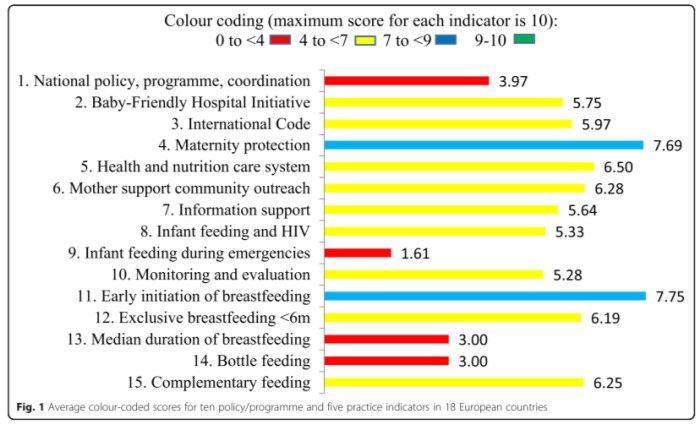
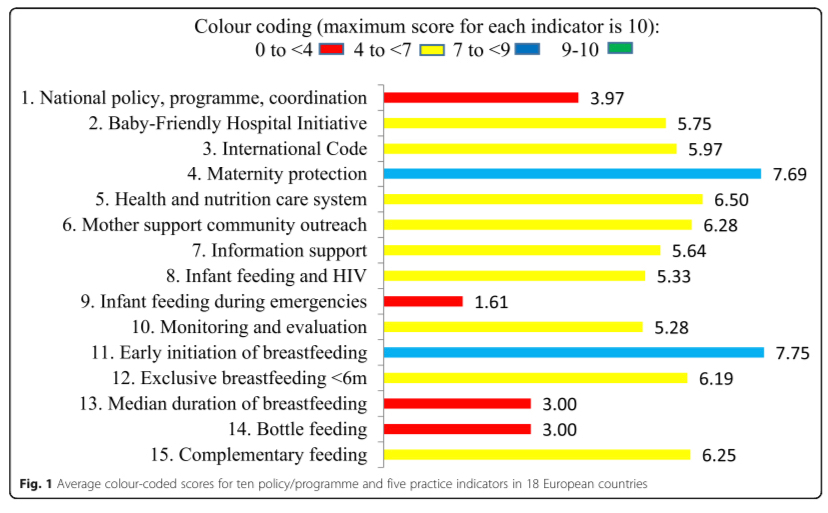
Yet a new WBTi regional report shows gaps in support for families across Europe, with the poorest overall scores in national leadership and, shockingly, emergency preparedness, where the UK scored 0/10. This pandemic is an emergency for infants and young children and only North Macedonia was found to have an adequate strategy.
Babies who are breastfed have better health and resistance to infection, and most mothers want to breastfeed. Yet many European mothers stop or reduce breastfeeding in the early weeks and months, and bottle feeding is prevalent, due to inadequate support from health systems and society.
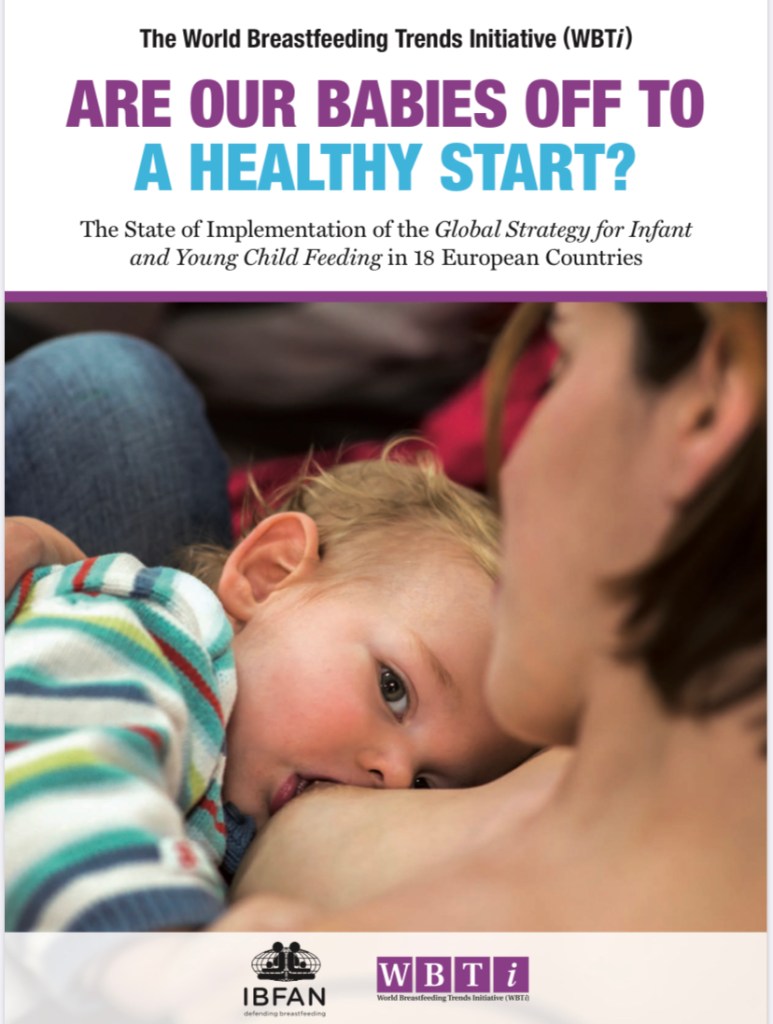
Launched today, the first European report on infant and young child feeding policies and practices, Are our babies off to a healthy start?, compares 18 countries and identifies the considerable improvements they need to make in supporting mothers who want to breastfeed. A summary report has been published today in theInternational Breastfeeding Journal.
The new report, Are our babies off to a healthy start?, compares the implementation of WHO’s Global Strategy for Infant and Young Child Feeding across 18 European countries. The comparisons show clearly that inadequate support and protection for breastfeeding mothers is a Europe-wide problem. The health of babies, mothers and whole populations lose out as a result. However, countries do differ considerably. Turkey rates highest overall; the five countries with the lowest scores belong to the European Union.
‘Nutrition is key to achieving the Sustainable Development Goals related to health, education, sustainable development, reduction of inequalities and more.’
Joao Breda, Head, WHO European Office for Prevention and Control of Noncommunicable Diseases
The scope of the assessment is wide-ranging, with ten policy and programme indicators, including national leadership, Baby Friendly hospital and community practices, marketing controls on breastmilk substitutes, health professional training, emergency preparedness and monitoring. There are also five feeding practices indicators, such as exclusive breastfeeding for 6 months, a WHO recommendation.
The original assessments were all carried out using the World Breastfeeding Trends Initiative (WBTi), a tool first developed in 2004 by the International Baby Food Action Network (IBFAN) but only launched in Europe in 2015. It requires collaboration with relevant organisations within a country on assessment scores, gaps identified and recommendations for improvements. The Report highlights good practice, enabling countries to learn from one another.
˝Success …rests first and foremost on achieving political commitment at the highest level and assembling the indispensable human and financial resources.’
WHO Global Strategy 2003
If governments, other policymakers, hospitals and community services, public health departments, institutions that train health professionals, and others, adopt the report recommendations, it will enable more mothers to initiate and continue breastfeeding, strengthening the health of the population for the future.
The WBTi European Working Group, led by Dr. Irena Zakarija-Grkovic of Croatia, produced the Report and comprises coordinators from European countries which have carried out a WBTi assessment. The production of the report was supported by the Croatian Ministry of Health and UNICEF Croatia.
Doctors have an important role to play in supporting mothers who are breastfeeding, through providing encouragement, accurate information and signposting to sources of specialist and peer support. Their impact can be significant because doctors and their advice are held in such high regard, and this is particularly important in the UK, where a mother’s intention to breastfeed can so easily be undermined.
There are doctors who have made themselves really knowledgeable but sadly the UK universal standards for pre-registration medical training in breastfeeding have significant gaps, as shown by Indicator 5 of the WBTi 2016 report (see Part 1 for the summary table below, and Part 2 for the details of standards for different health professions)
Curriculum developments
However, there have been some positive changes since the publication of the WBTi UK report.
The WBTi UK team contributed to both curriculum consultations.
GP Infant Feeding Network and Hospital Infant Feeding Network
Dr. Louise Santhanam founded the GP Infant Feeding Network (GPIFN) in 2016 and in 2019 Drs Vicky Thomas and Ilana Levene launched the Hospital Infant Feeding Network (HIFN), which are valuable resources for medical professionals. See our series of three guest blogs from HIFN: Launch of HIFN, #DontStopLookItUp campaign on prescribing for breastfeeding women, and free posters on breastfeeding issues in the hospital setting.
New learning outcomes published by Unicef UK Baby Friendly Initiative
Doctors have a long training so there needs to be input at different stages of training and also encouragement for already qualified doctors to update. A group looking at this was initiated by the WBTi team and went on to be led by Unicef UK Baby Friendly Initiative, and chaired by paediatrician Charlotte Wright. Unicef UK Baby Friendly launched the resulting infant feeding learning outcomes in World Breastfeeding Week, with accompanying resources expected to follow soon (see our August 2019 blog). These are intended as a guide for training for various health professions from undergraduate courses through to the point of qualification.
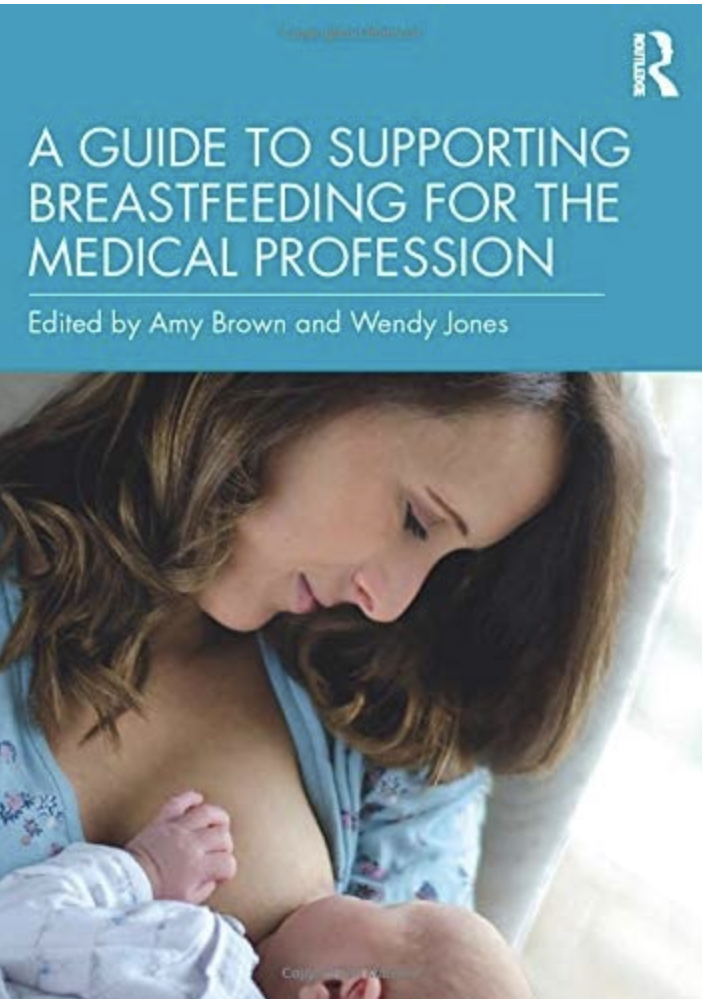
New online book for trainee doctors
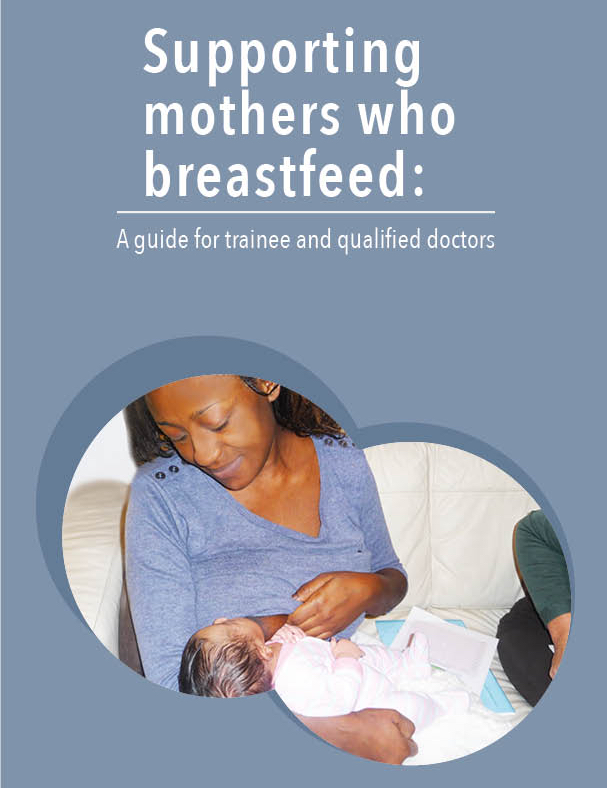
My book, Supporting mothers who breastfeed: a guide for trainee and qualified doctors, is primarily for trainee doctors but relevant to qualified doctors too. At the trainee stage they have specialised and are working clinically. The book provides a combination of factual knowledge about breastfeeding and an insight into mothers’ experiences. It includes some examples of good practice in responding to common situations and ends with a short quiz. It is available on the WBTi website (https://ukbreastfeeding.org/supporting-mothers-who-breastfeed-a-guide-for-trainee-and-qualified-doctors/) as a free PDF. Being electronic, it is easy to click on links to be taken to references and sources of further information, and can be updated more readily than a paper book.
I am very grateful to Charlotte Wright, who is Professor of Community Child Health at the University of Glasgow and a consultant paediatrician, for writing the foreword.
If you know any trainees or qualified doctors, perhaps you would pass the weblink to them.











 Breastfeeding trends (UK)